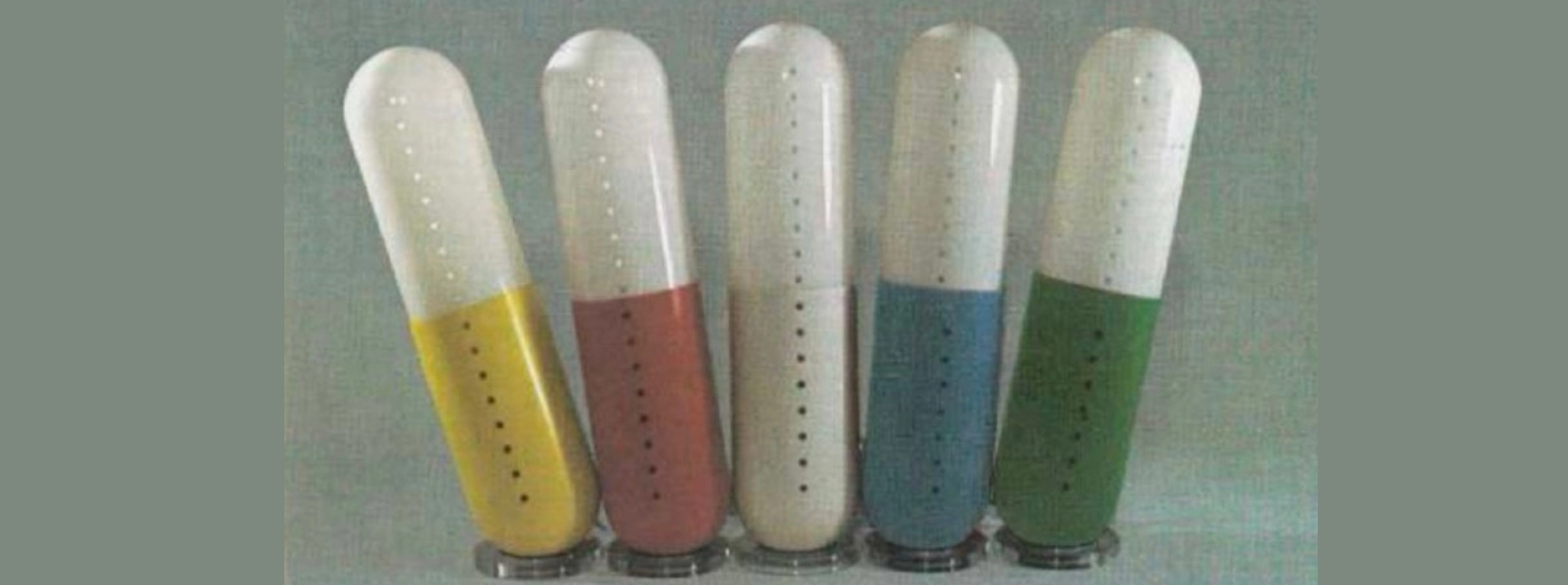
The Pill lamps, designed in 1969 by Italian designers Emanuele Ponzio and Cesare Casati, embody the playfulness, innovation, and vision that defined mid-century Italian lighting design. With their distinct minimalist shapes and vibrant colors, Pill lamps are instantly recognizable. These lamps were revolutionary, introducing a new aesthetic that celebrated clean lines, bright hues, and the inventive use of plastic materials, often paired with bakelite and opaline glass. Today, they remain a symbol of the era’s experimental spirit and have left a lasting impact on the design of contemporary, colored, and minimalistic lighting.
During the post-war period, Italy experienced a design renaissance. The rapid economic growth known as the miracolo economico transformed Italy into a hub for design innovation. Italian designers, including Emanuele Ponzio and Cesare Casati, were at the forefront of this movement, rethinking everyday objects and pushing the boundaries of modern materials and manufacturing processes. Plastic was one such material that became emblematic of this era, celebrated for its versatility, durability, and affordability.
The 1960s were a time of experimentation, and Italian designers explored materials such as polycarbonate, ABS plastic, and acrylic as new ways to shape and color objects for the home. This exploration was inspired by the emerging trends in industrial design, which embraced futuristic forms and colors. Designers like Ponzio and Casati adopted plastic as a material that could be formed into sleek, geometric shapes, creating a new style of lighting that felt fresh, accessible, and above all, modern.
The Pill lamp quickly became iconic due to its bold, playful design that combined geometric shapes with contrasting textures and colors. The lamp was typically made with an outer plastic shell, paired with components in bakelite and opaline glass. The opaline glass provided a warm, diffused light, softening the glow and creating an inviting atmosphere. This contrasted with the smooth, sometimes glossy surface of the plastic shell, giving the Pill lamps their signature look.
Each Pill lamp was distinguished by its vibrant color choices, often produced in primary colors like red, yellow, and blue, as well as bright green, orange, and purple. These bold hues were not merely aesthetic; they were a reflection of the optimistic spirit of the era. The minimalist, circular design and pill-like shape of the lamp made it an immediate eye-catcher, while the streamlined form aligned with the functionalist design principles of the time.
A key aspect of the Pill lamp was its portability and versatility. Unlike traditional lighting fixtures that were fixed in place, the Pill lamp could be moved easily and placed in various spaces around the home, fitting seamlessly into both living rooms and bedrooms, and even used as a table lamp or as a piece of standalone decor. Its clean lines and adaptability made it an early example of modular design in lighting, a concept that would gain popularity in the decades to come.
The legacy of the Pill has been vast, influencing 70s colored and minimalistic lamps and the continued use of plastic materials in lighting. Designers across the world have taken inspiration from the lamp’s minimalist forms and vivid colors, creating lighting that serves both functional and decorative purposes. Some of the most notable influences can be seen in designs that use modular, stackable parts, versatile shapes, and the use of bright, playful colors to add a pop of energy to interior spaces.
One of the lasting impacts of the Pill lamp is the trend of using colored plastics to achieve different lighting effects. Designers like Verner Panton and Joe Colombo, contemporaries of Ponzio and Casati, also experimented with plastic in lighting, creating fixtures that had similar elements of color, form, and simplicity. However, Ponzio and Casati’s work with Pill lamps helped popularize the idea that lighting could be a standalone art piece, not just a functional source of illumination.
The use of plastic in lighting has seen a resurgence in recent years, with modern designers adopting the material for its eco-friendly potential and versatility. Today, many contemporary lighting designers are returning to the principles of 1960s and 70s minimalism, creating lamps that blend simplicity with vibrant colors to match today’s minimalist yet expressive interior design trends.
Brands such as Kartell and Flos, leaders in contemporary Italian lighting, often produce lamps with colored plastic elements, inspired by iconic designs like the Pill lamp. Their modern interpretations are a nod to mid-century Italian design, highlighting both the aesthetic appeal and the enduring durability of plastic.
Today, original Pill lamps are highly collectible items, sought after by design enthusiasts and vintage collectors who appreciate the unique style and heritage of Italian mid-century lighting. As vintage decor becomes increasingly popular, Pill lamps have become highly coveted for their blend of functional design and artistic appeal. Collectors appreciate the Pill lamps not only for their unique aesthetic but also for their cultural significance, as they represent a defining era in the history of Italian design.
A vintage Pill lamp, especially one in pristine condition, is often considered an art piece that adds character to a modern interior. Their unique use of plastic, bakelite, and opaline glass materials, combined with a distinct minimalist design, makes them instantly recognizable, adding a touch of vintage charm and mid-century flair to any space.
The Pill lamps designed by Emanuele Ponzio and Cesare Casati in 1969 continue to inspire contemporary lighting design, representing an era that celebrated bold colors, innovative materials, and minimalist forms. As both a functional object and a piece of art, the Pill lamp remains a beloved classic, its vibrant colors and sleek lines still relevant in today’s interior design landscape. By pioneering the use of plastic and bakelite in lighting, Ponzio and Casati paved the way for future generations of designers to think beyond traditional materials and shapes, proving that lighting design could be both playful and sophisticated.
The Pill lamp’s legacy lives on as a timeless example of Italian mid-century innovation and serves as a reminder of the creative power of materials like plastic and opaline glass. Its influence is evident in today’s design world, where minimalist and colorful lighting continues to captivate, inspiring designers to merge form, function, and artistic expression in a way that’s as iconic now as it was over half a century ago.