
Harvey Guzzini is not a designer’s name, but one of the most influential Italian lighting companies of the 20th century. Founded in the late 1950s, the brand became a defining voice of Space Age design — where acrylic, light, and sculptural form merged into objects that were both functional and expressive. From table lamps to futuristic pendant lights, Harvey Guzzini redefined how light could shape a space. Not just illumination, but atmosphere.
In this article, we explore the origins of the brand, its most iconic designs, and why these lamps still feel relevant today.
Founded in 1959, Harvey Guzzini started as a family business in Recanati, Italy, by the six Guzzini brothers. Inspired by the 1950 film Harvey starring James Stewart, they initially focused on creating decorative objects from copper. In 1963, their focus pivoted towards lighting, marking the beginning of a new era with Luigi Massoni as head of design and strategic director.
Massoni, a renowned Italian designer who also collaborated with prestigious brands like Alessi and Poltrona Frau, infused Harvey Guzzini with a blend of industrial functionality and high aesthetic value. His partnerships with other notable designers — including Gio Ponti, Fabio Lenci, Giuseppe Cormio, and Rodolfo Bonetto — significantly enriched the company’s portfolio.
The design philosophy at Harvey Guzzini was heavily influenced by the optimism and dynamism of the Space Age. The company’s goal was to create lamps that served not only as sources of light but as sculptural elements and expressions of mid-century Italian lifestyle.
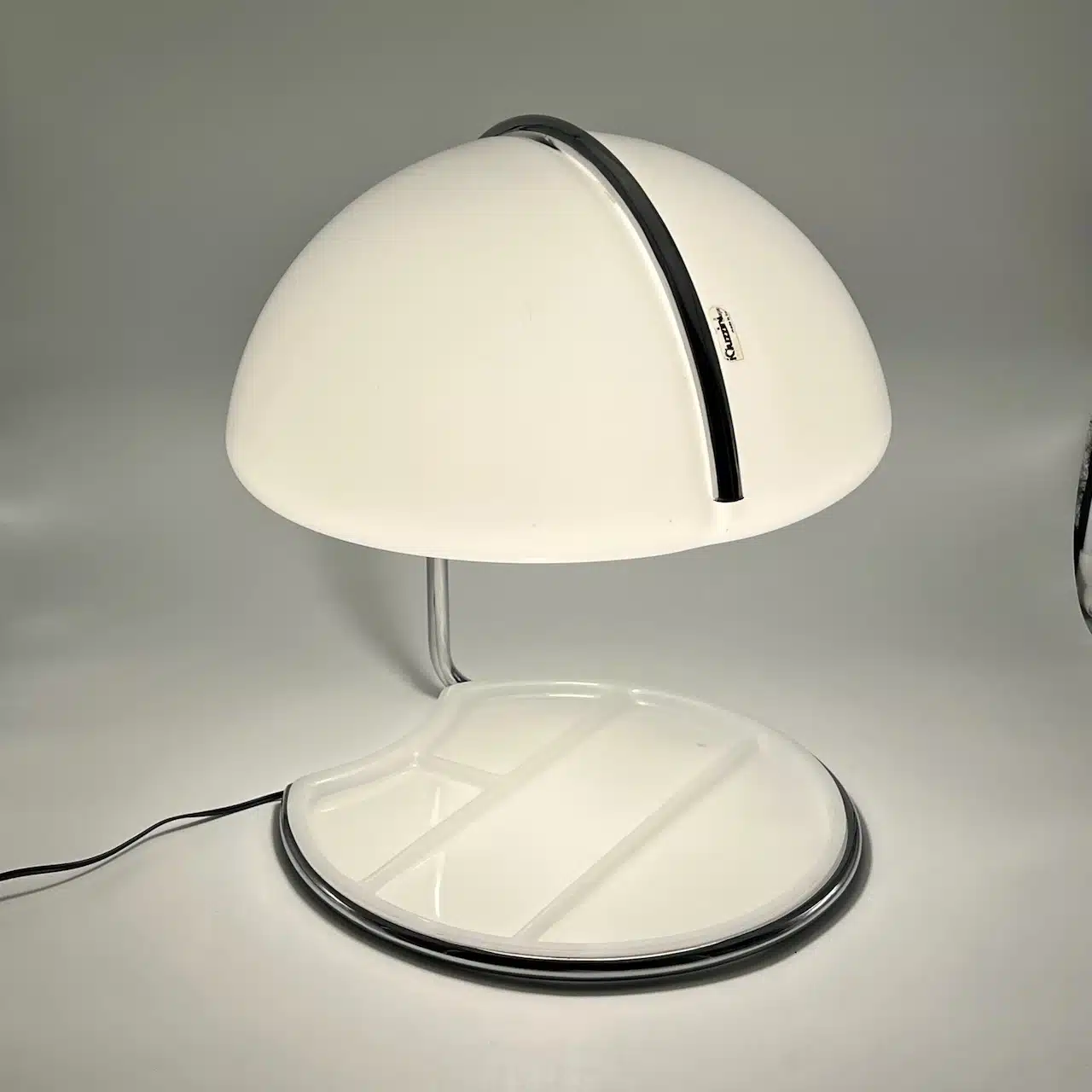
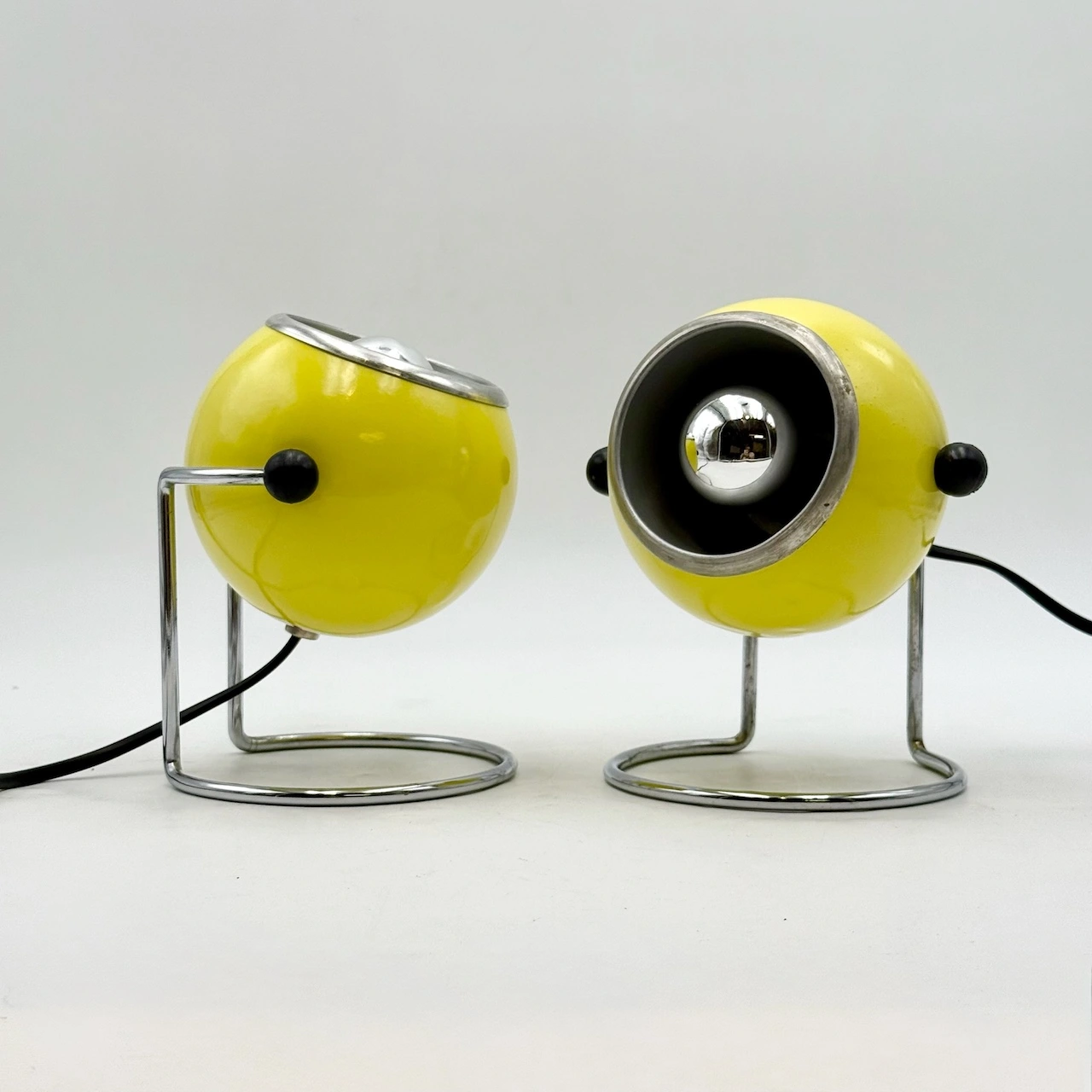
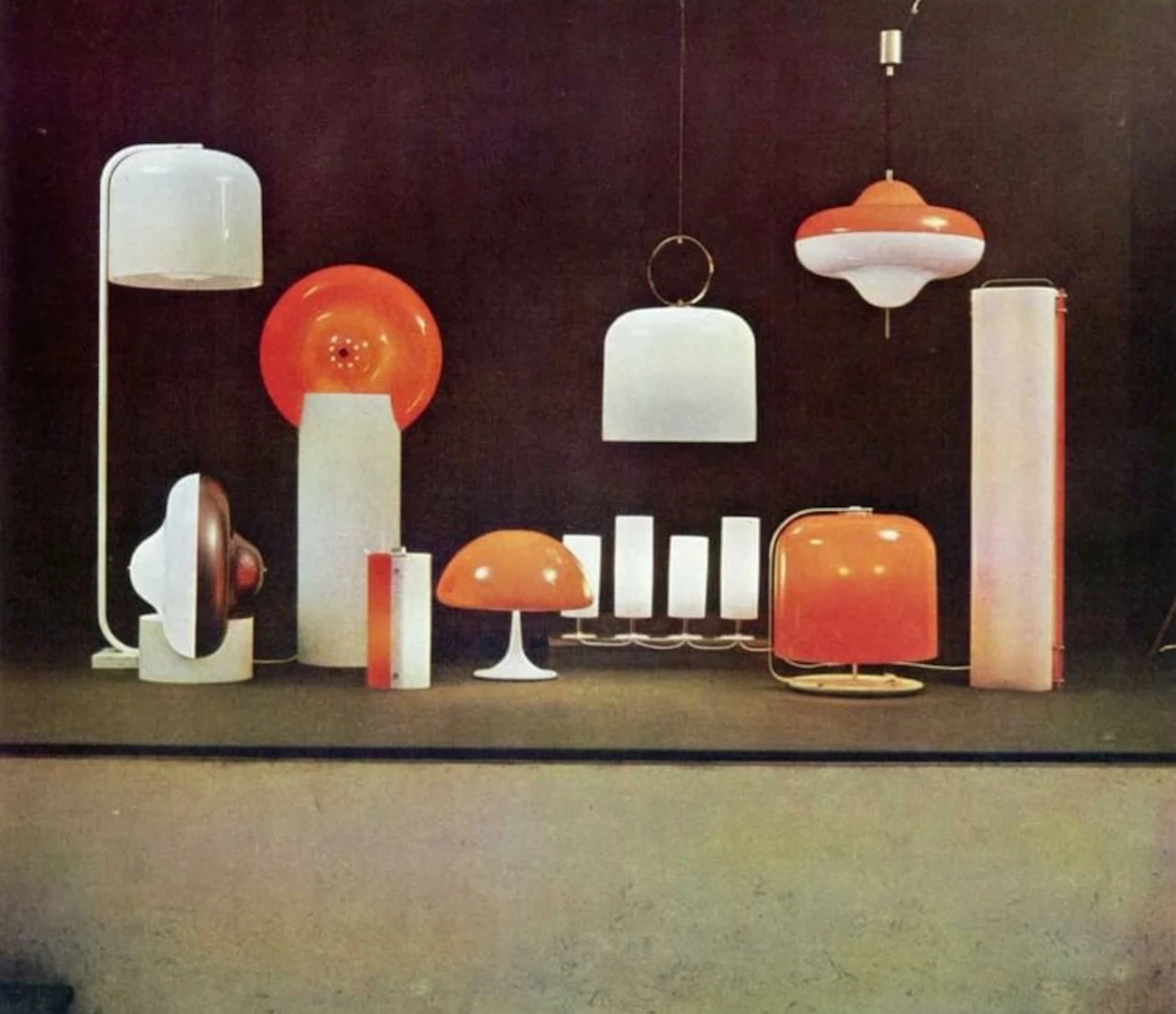
Harvey Guzzini’s lamps distinguished themselves through innovative materials, geometric silhouettes, and bold pop colors. Iconic designs include the Mushroom table lamp (1965), the Arc floor lamp (1968), the Faro lamp (1970), and the Toledo table lamp (1973).
Harvey Guzzini’s lamps gained international acclaim, becoming popular across Italy, Europe, the UK, and the US, where they frequently appeared in TV shows and movies like The Italian Job and Star Trek.
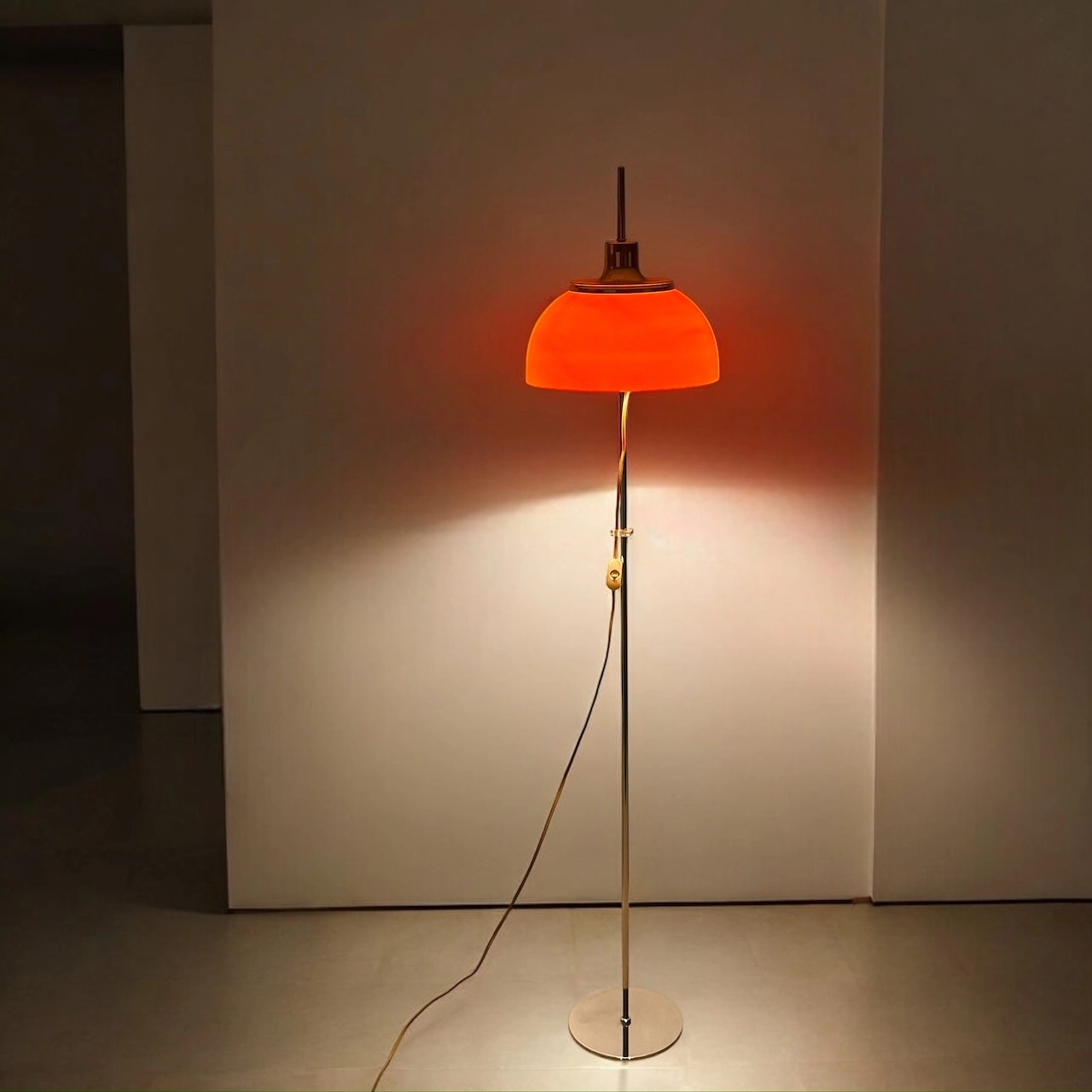
Original 1970s Guzzini lamps, acrylic pendants, and desk lights move fast among collectors. Join our VIP Collector List to get early notice whenever new vintage lighting pieces enter our shop catalog.
Get Early Access To Lighting Drops →No spam, only authentic vintage drops. Unsubscribe at any time.
The design aesthetic of Harvey Guzzini evolved through the decades. During the 1960s and 1970s, the brand was synonymous with the Space Age style, drawing inspiration from space exploration and futuristic pop-culture. This era relied heavily on polymethyl methacrylate (PMMA / acrylic), chrome-plated steel, and vibrant tones.
Famous creations from this era include the Shell Lamp (Luigi Massoni & Luciano Buttura), the Cespuglio, the Fiona, the Pic Boll, and the Burgos lamp, known for its elegant white acrylic shade and chrome detailing.
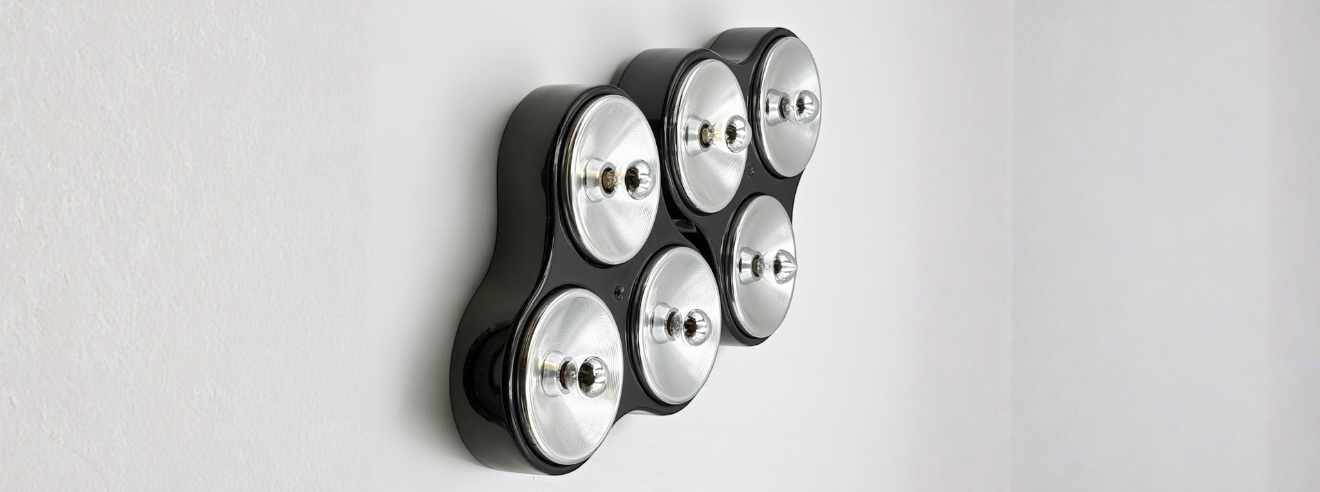
By the late 1970s and 1980s (transitioning under the iGuzzini brand name), the company embraced a modern minimalist language, integrating low-voltage halogen tech, dimmable transformers, and modular architectures like the Olympe, Birghitta, and Cobra lamps.
Harvey Guzzini’s success wasn't just aesthetic; it was grounded in manufacturing innovation. The brand pioneered thermoformed acrylics, allowing lightweight, seamless domes and globes that created unmatched light dispersion without heavy shadows.
By combining chrome-plated metals with colorful or translucent plastics, Guzzini made lamps that functioned as glowing architectural sculptures whether turned on or off.
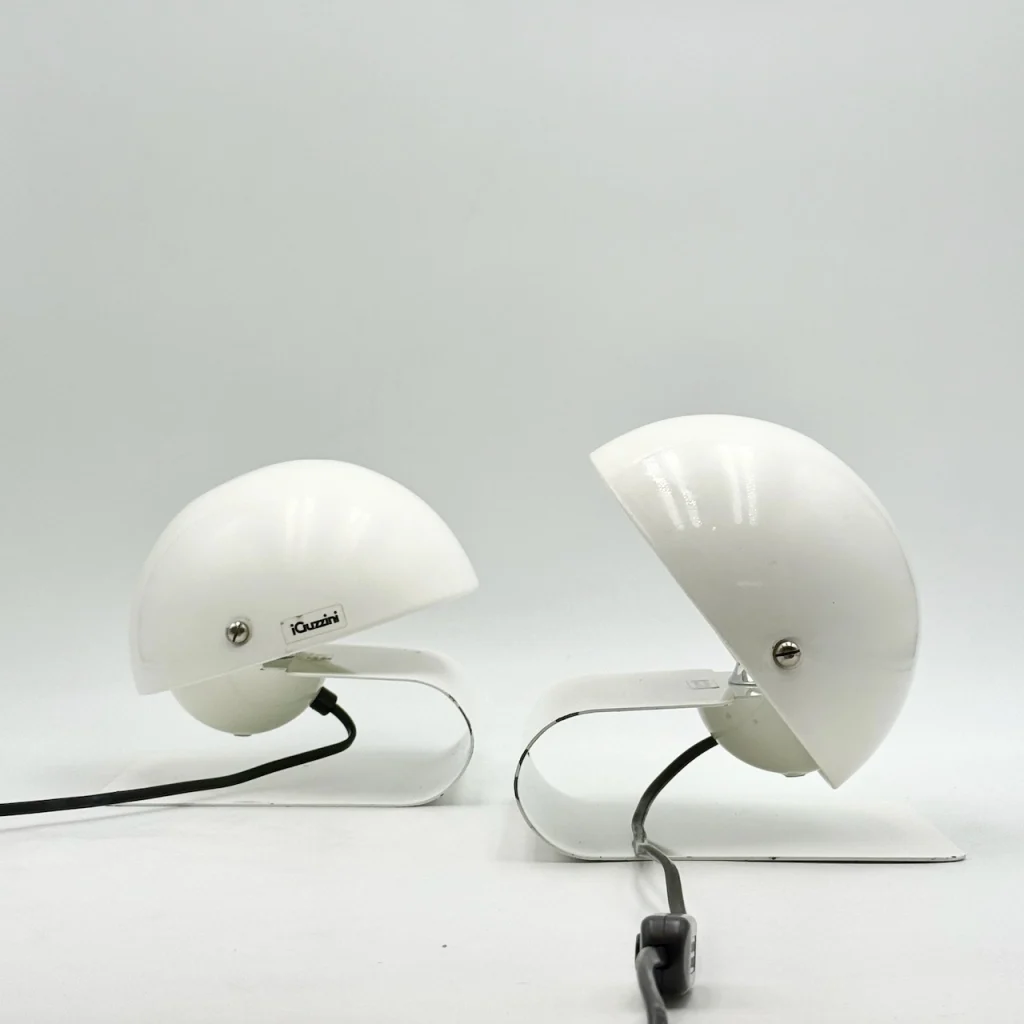
Harvey Guzzini redefined how light inhabits a home — not merely as utility, but as mood, art, and identity. Iconic small pieces like the Bugia table lamp (designed by Giuseppe Cormio for the Milano Fair in 1975) demonstrate how even a single curved sheet of painted metal can transform ambient light.
If you are looking to bring authentic mid-century atmosphere into your home, explore our curated Vintage Space Age Lighting Collection to browse original Guzzini pieces and 1970s Italian desk lamps.
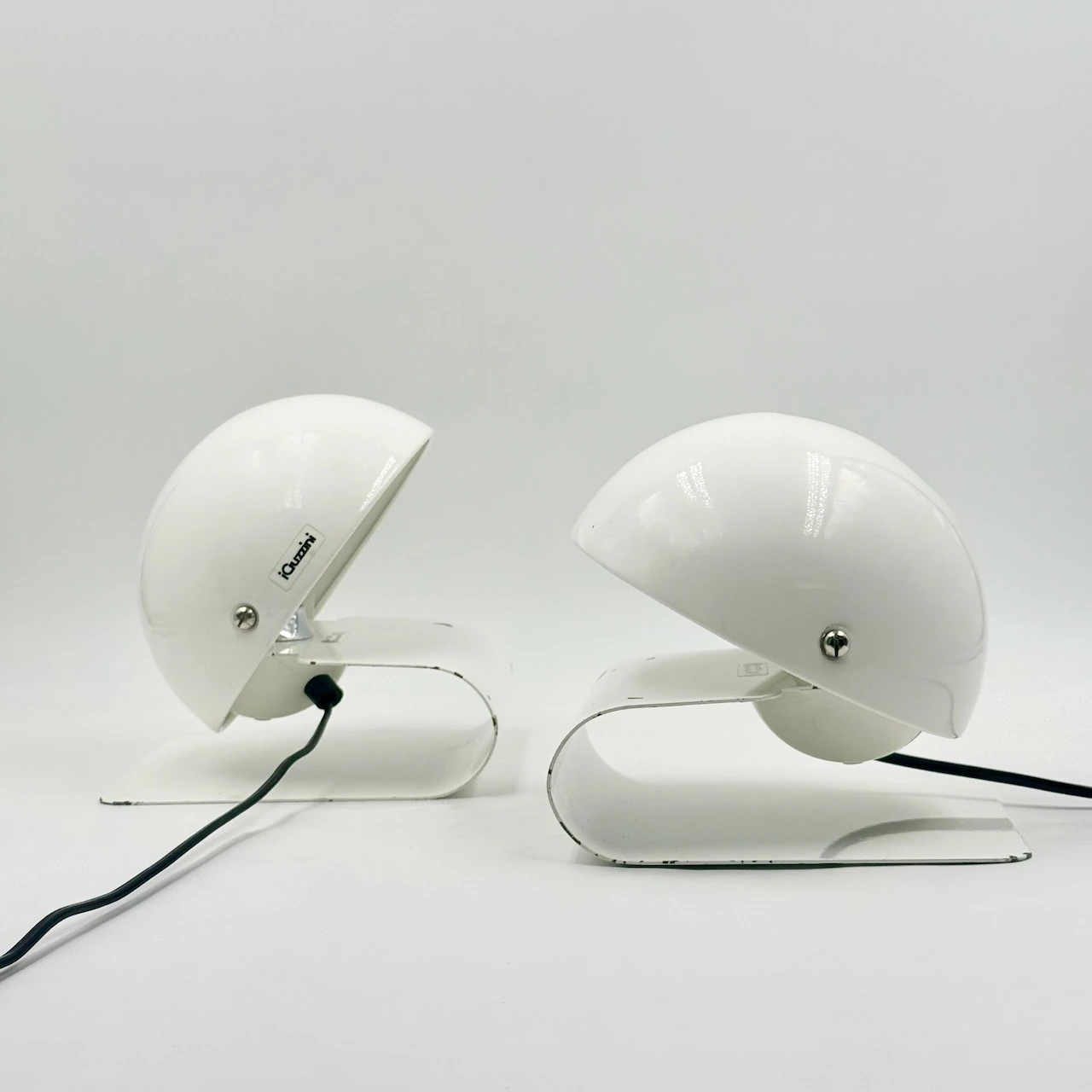
A 1970s Italian design icon by Giuseppe Cormio with a minimalistic white finish, ideal for bedside or desk lighting.
View Bugia Lamp Pair →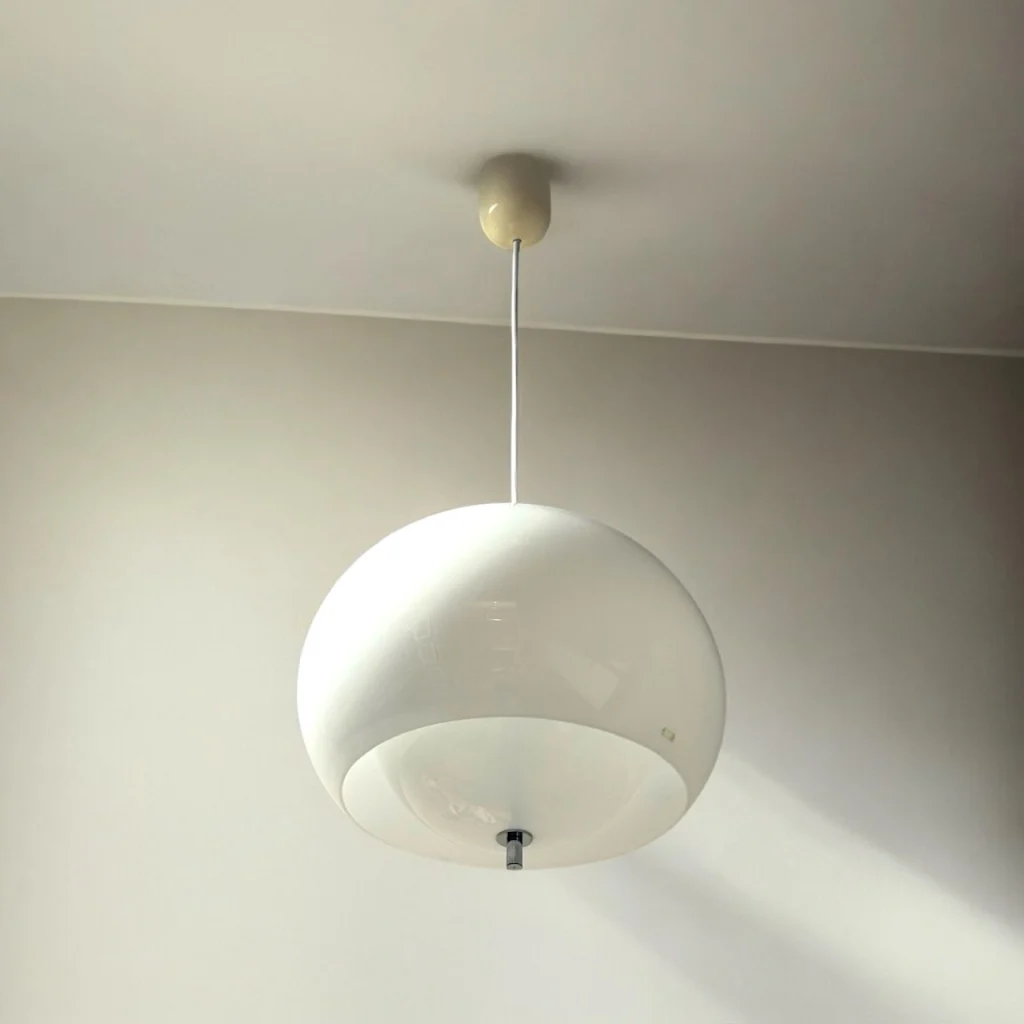
A 1960s-70s original featuring white methacrylate diffuser and chrome-plated steel accents.
View Burgos Lamp →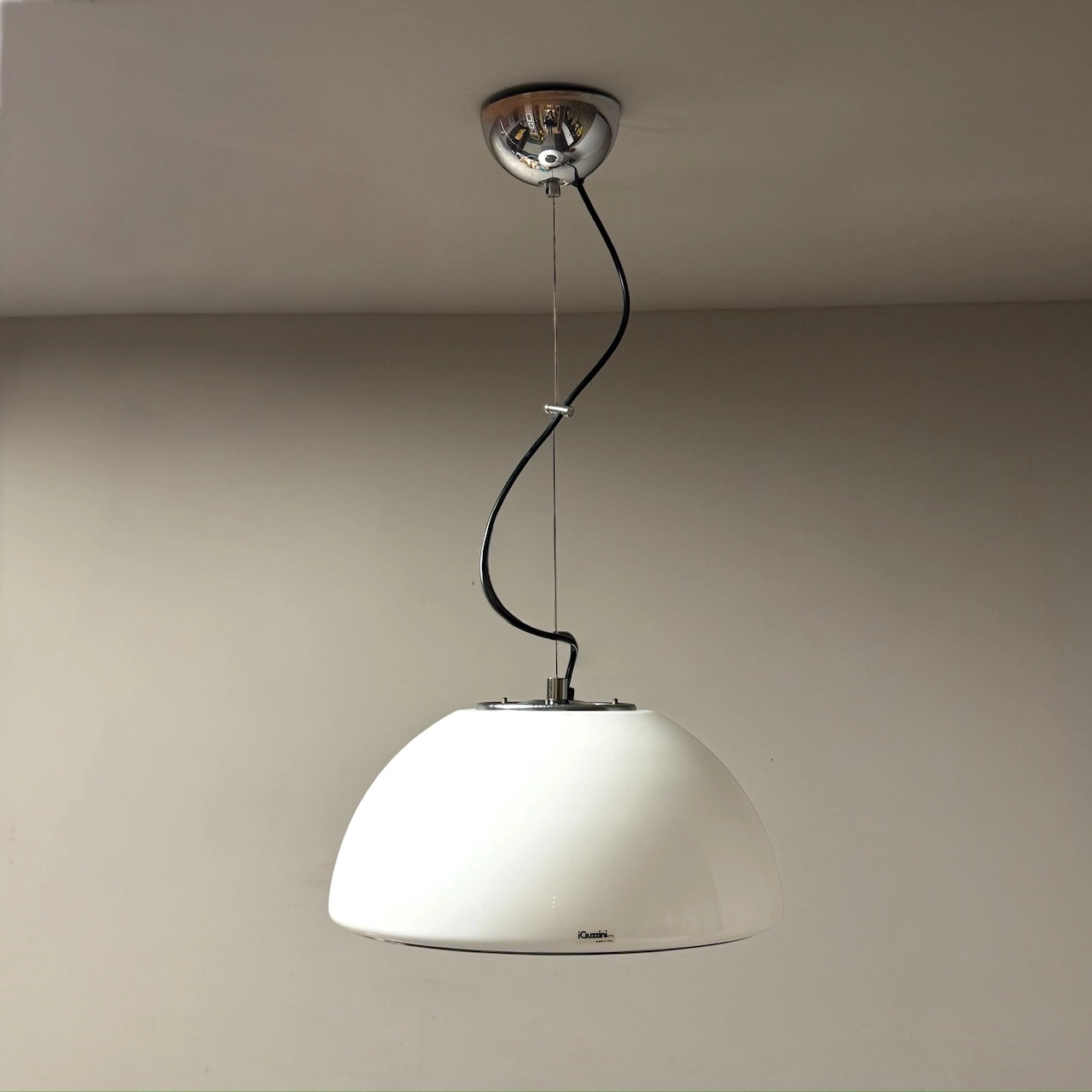
Rare 1970s Italian pendant fixture with white methacrylate shade and chrome structure.
View iGuzzini 3072 Pendant →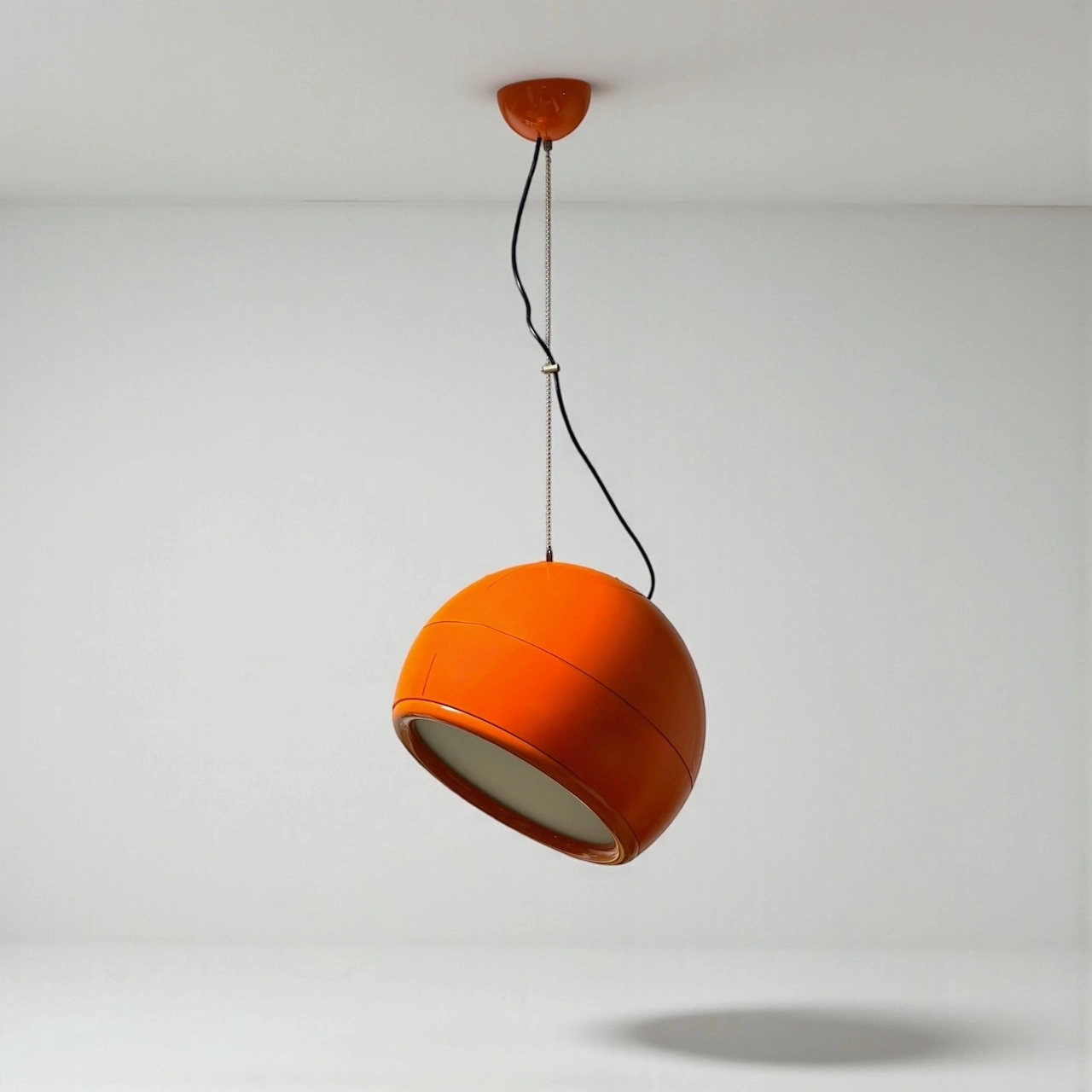 Shop Collection
Explore our full collection of authentic 1960s and 1970s Italian lamps, Guzzini acrylic domes, and pop design floor lights.
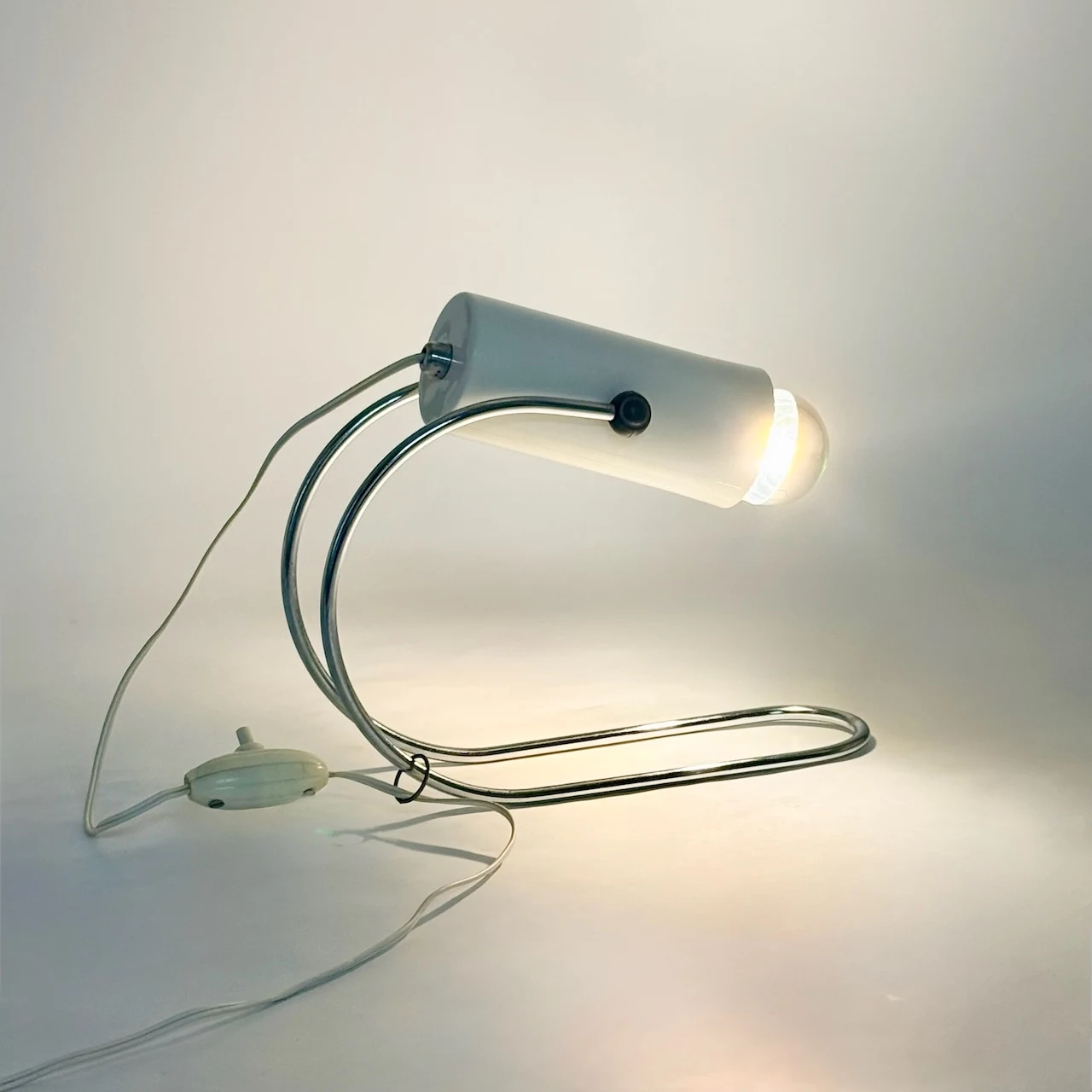 From The Journal
Diverse and artistic 1960s lamp designs: exploring materials, artistic shapes, and light evolution.