

During the Space Age era, mirrors stopped being purely functional objects and became part of a broader vision of futuristic living. Designers across Europe began experimenting with soft geometries, molded plastics, integrated lighting, and sculptural silhouettes that transformed mirrors into decorative statements.
Rather than disappearing into interiors, these mirrors were designed to stand out. Their rounded forms, glossy surfaces, and unconventional proportions reflected the optimism of the late 1960s and 1970s — a time when domestic objects were imagined as part of a new futuristic lifestyle.
From bathroom mirrors to vanity pieces and modular wall compositions, Space Age mirrors introduced a playful and atmospheric approach to reflection and interior design.
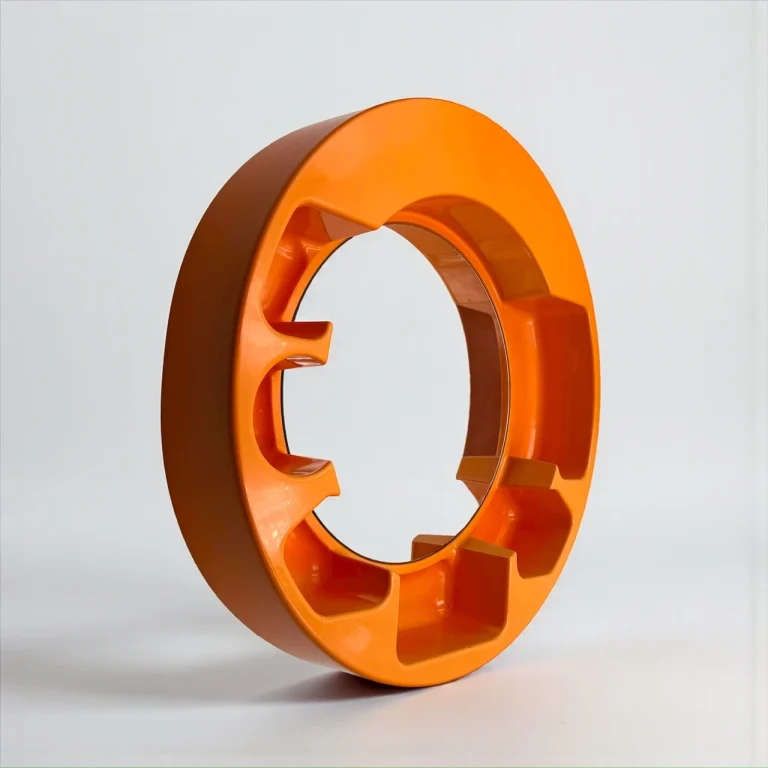
The rise of plastic materials played a crucial role in the evolution of Space Age mirrors. Lightweight, affordable, and highly moldable, materials such as ABS and acrylic allowed designers to explore entirely new shapes and production methods.
Rounded frames, integrated compartments, illuminated edges, and modular constructions became increasingly common throughout the 1970s. Plastic was no longer perceived as a cheap substitute, but as a futuristic material capable of expressing modernity and experimentation.
This shift opened the door to a new generation of mirrors that felt softer, lighter, and more adaptable to contemporary interiors than traditional wooden or metallic designs.
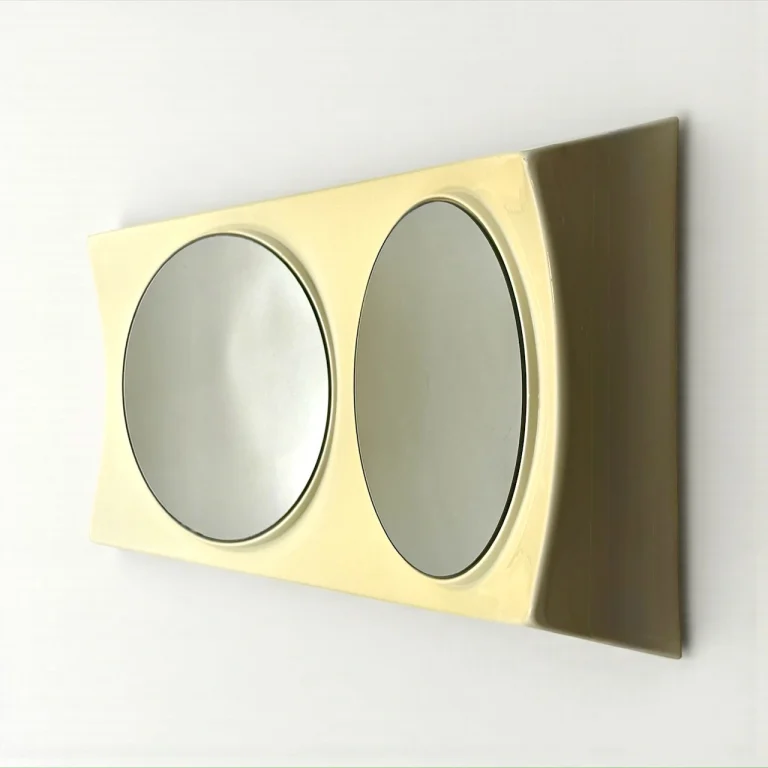
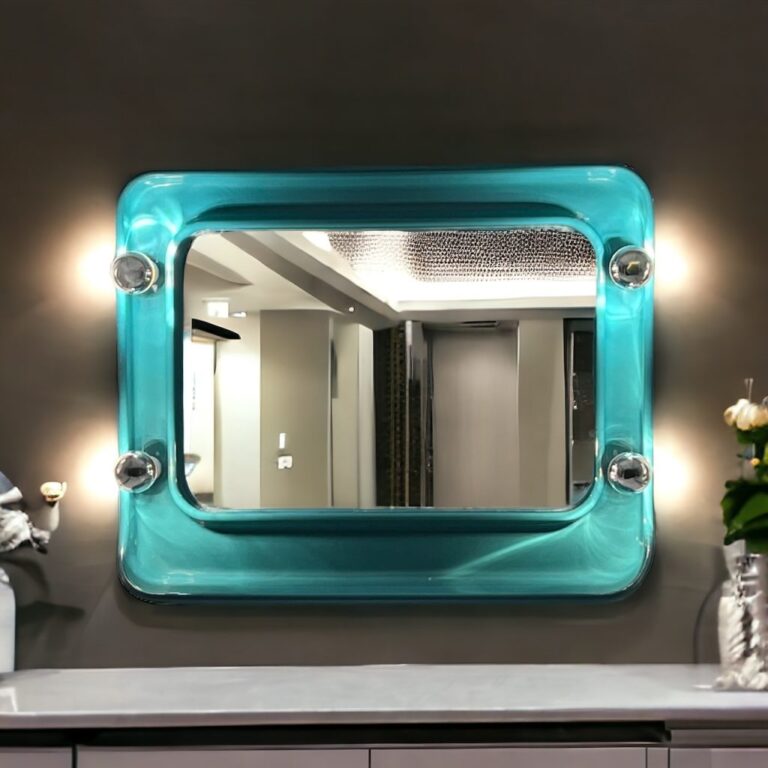
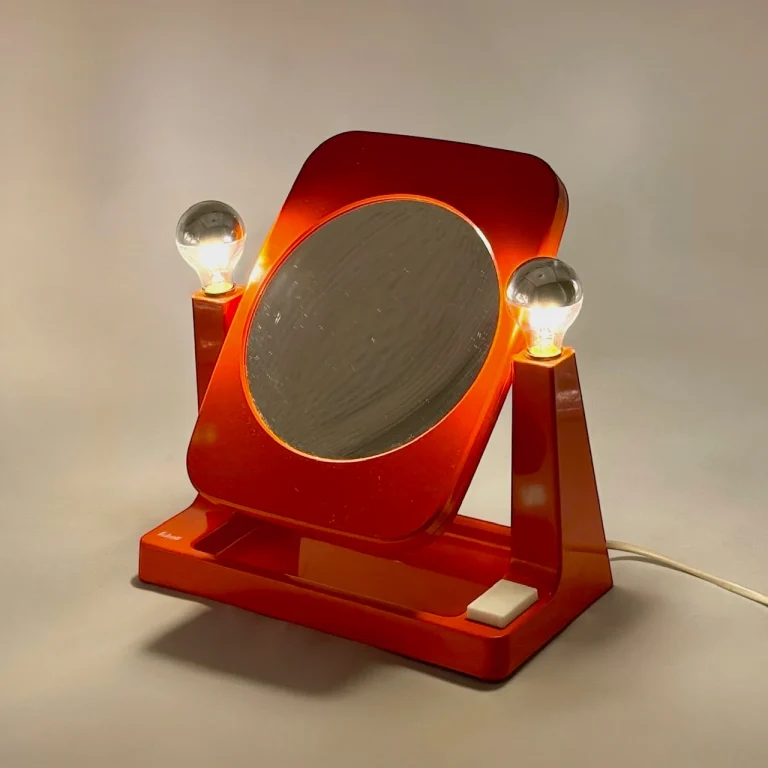
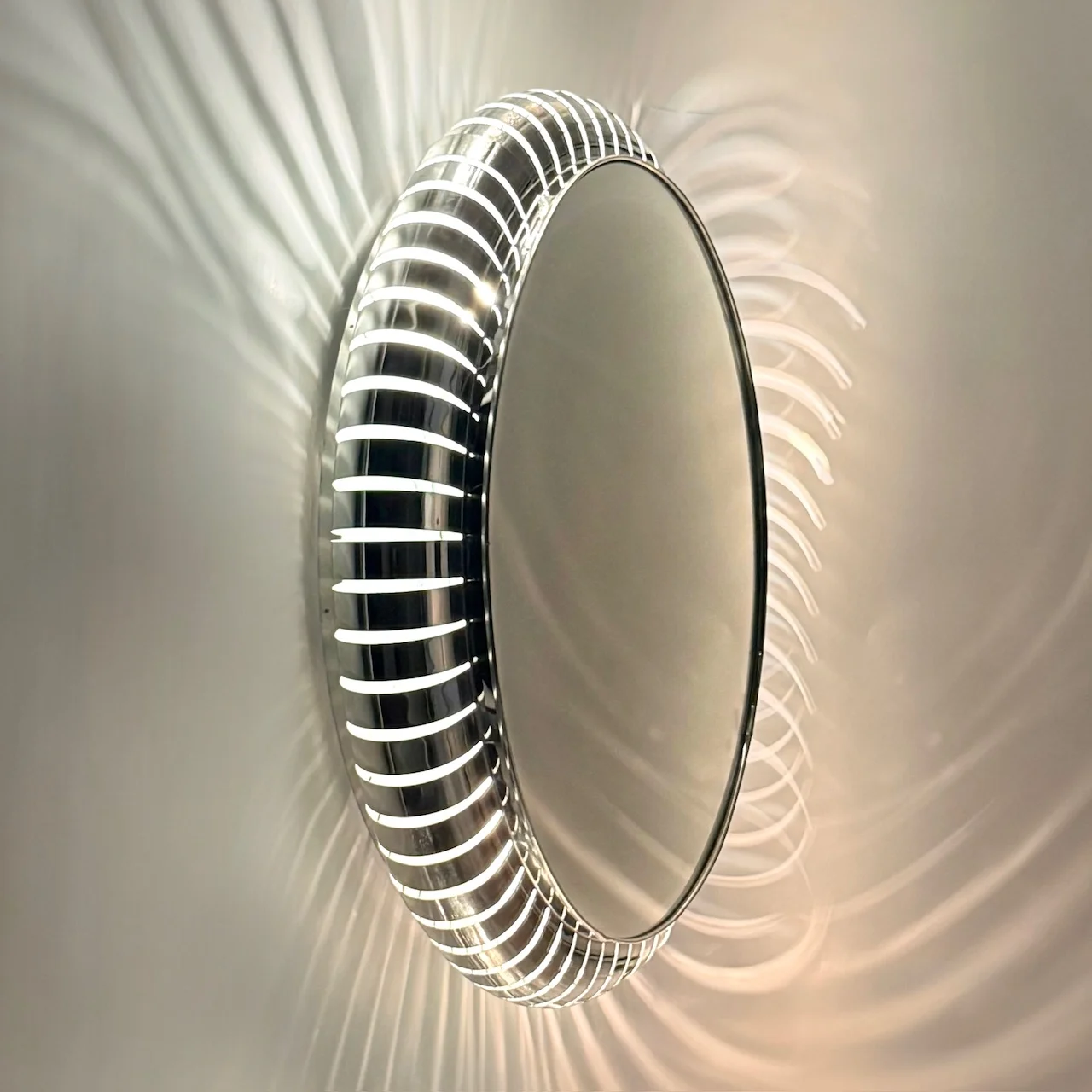
Many Space Age mirrors incorporated integrated lighting systems, turning reflection into atmosphere. Soft illuminated frames, rotating mirrors, and vanity compositions created a more intimate and futuristic relationship between light and domestic space.
These mirrors were often designed for bathrooms and dressing areas, yet their sculptural qualities allowed them to function as decorative objects far beyond their original purpose. The combination of reflection, diffuse light, and curved forms helped create interiors that felt cinematic, warm, and subtly futuristic.
Today, illuminated Space Age mirrors continue to resonate precisely because they blur the line between utility and atmosphere.
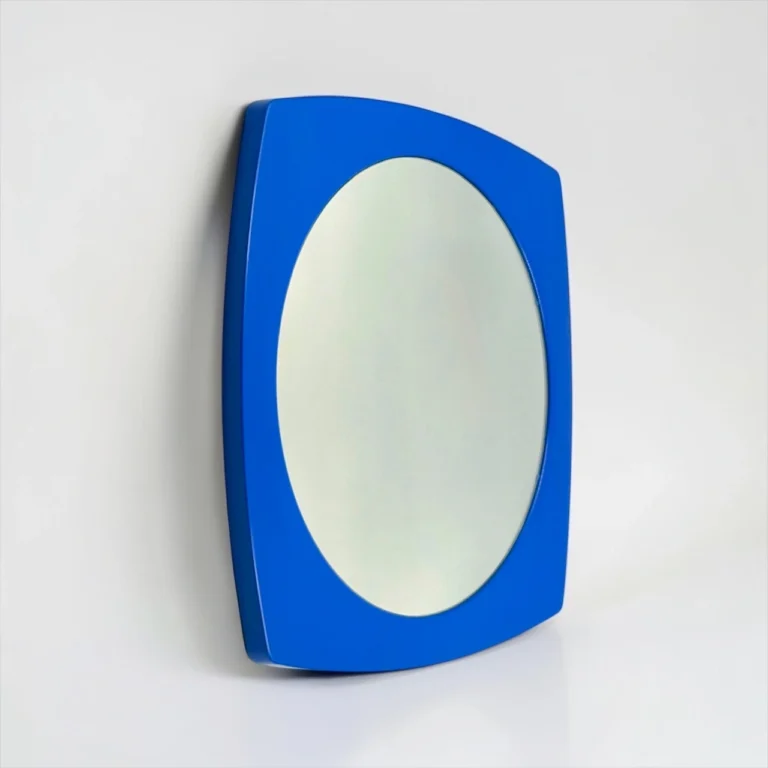
A vivid blue geometric mirror with strong Space Age character, designed to bring color, rhythm and graphic presence to the wall.
Charming space age makeup mirror with integrated lights and switch produced by Schott in the 70s. Vibrant orange finish and iconic retro modern shape.
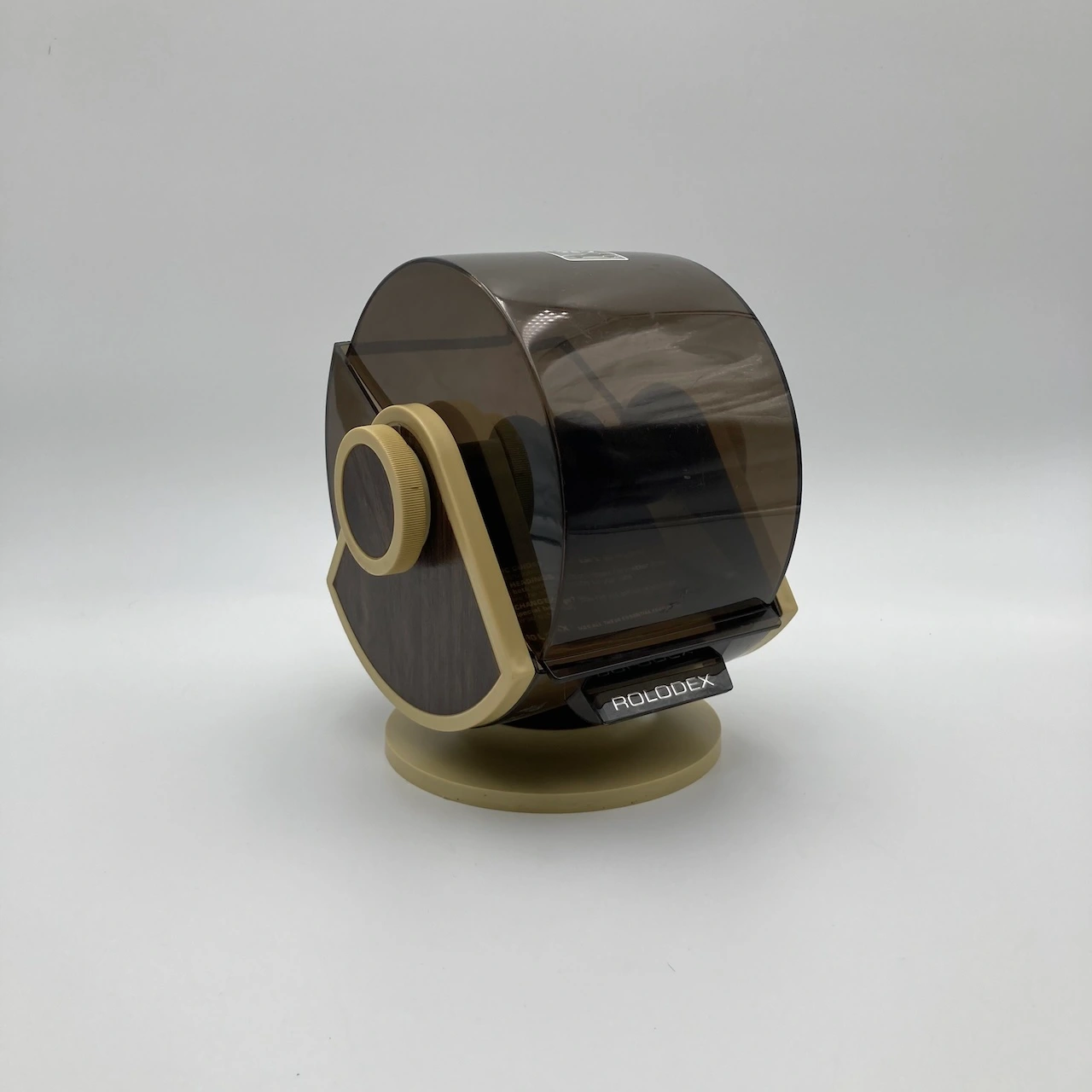
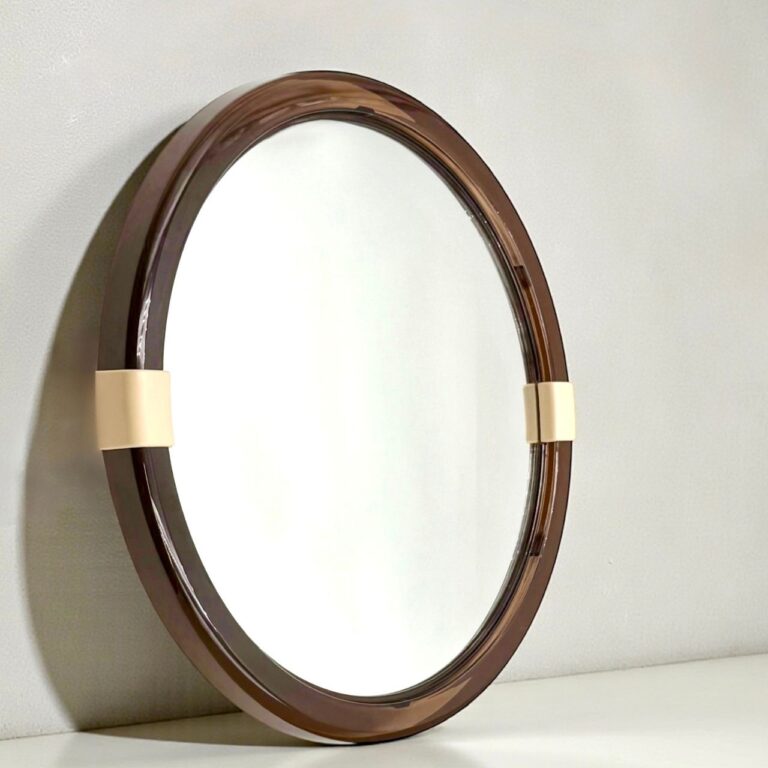
A rare space age design round wall mirror with smoked brown translucent lucite and ivory details. Pivoting and fully functional.
Bring futuristic flair and iconic 1960s/70s design into your home. Explore our curated selection of vintage mirrors and rare wall statement pieces.
Explore Vintage Mirrors Collection →Worldwide safe shipping and packed with care.
Discover more rare statement items, architectural mirrors, and historical design editorials that define the mid-century era.
 Shop Collection
Explore sculptural wall mirrors, modular frames, and futuristic design accents from the 1960s and 1970s.
 Editorial / Blog
Discover the history and unique appeal of the iconic Lipstick mirror by Rodolfo Bonetto, a true retro design statement piece.