For those enchanted by the elegance and craftsmanship of vintage lighting, vintage Murano lamps are a veritable treasure trove, brimming with beauty and steeped in history. These exquisite pieces, hailing from the esteemed Murano glass tradition, infuse any space with a touch of Italian luxury and a timeless sense of design.
Whether you’re a seasoned collector or newly intrigued by the realm of vintage lighting, Murano lamps present a unique amalgamation of artistry, functionality, and a nostalgic allure. From their intricate swirl patterns to the vibrant colors and distinctive shapes, each Murano lamp stands as a tribute to the master glassblowers who have honed their craft over centuries.
In this guide, we will immerse ourselves in the captivating world of vintage Murano lamps, uncovering their history, iconic styles, and the reasons behind their enduring appeal to collectors and interior design aficionados alike.
The story of Murano glass is deeply intertwined with the history of Venice. The origins of Murano glassmaking date back to the early days of the Venetian Republic, when glassmakers from the mainland fled to the Venetian lagoon to escape barbarian invasions. By the 8th century, glassmaking was well established in Venice, thanks to its strategic position as a trade center between the Byzantine Empire and the Orient.
The critical turning point came in 1291 when the Doge of Venice, Pietro Gradenigo, issued a decree relocating all glass furnaces from Venice to Murano. This move was ostensibly to prevent fires in the largely wooden city of Venice but also served to protect the secrets of glassmaking by isolating the glassmakers on the island.
Despite the challenges, including the need to import all raw materials from the mainland, Murano thrived as a glassmaking center. The isolation allowed for the development of unique techniques and the evolution of glassmaking from a practical craft to an art form.
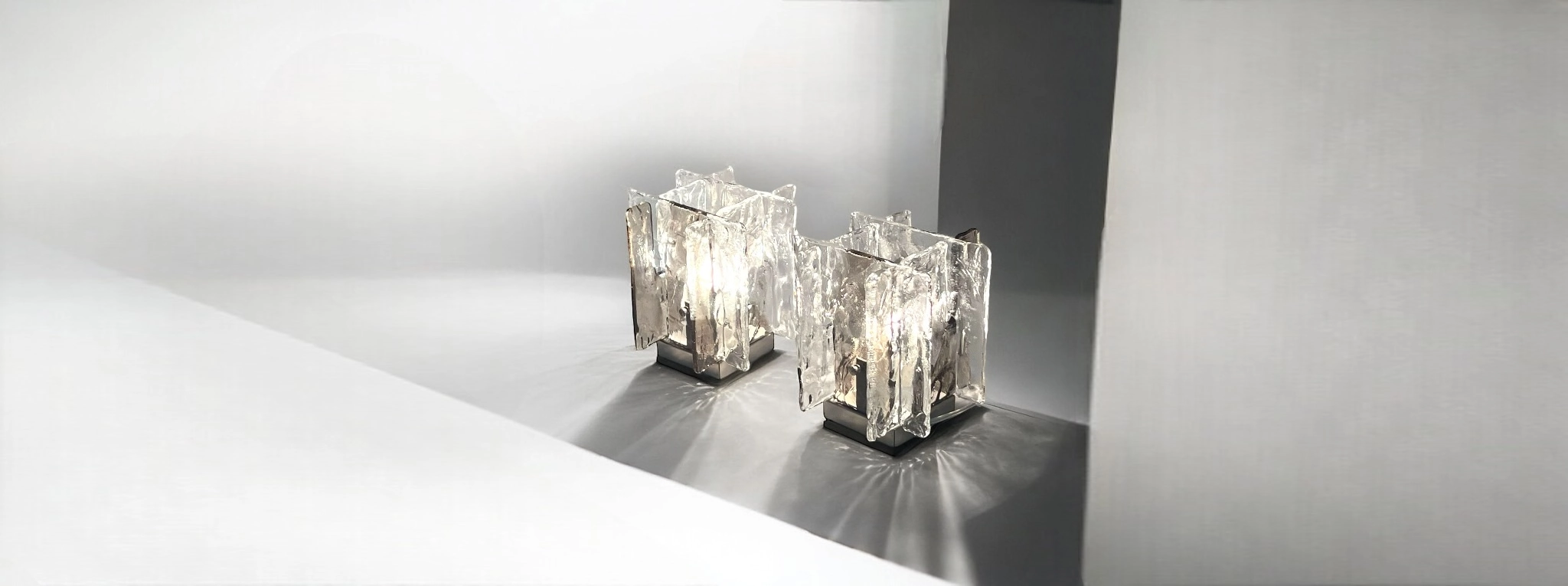
The craftsmanship of Murano glass lamps is rooted in centuries-old techniques that have been passed down through generations of glassmakers. One of the most iconic techniques is the creation of cristallo, a fine, almost transparent glass, handmade Murano ice glass by Toso, and lattimo, a porcelain-like milk glass, which were developed in the 15th century.
For lamp making, artisans often employ techniques such as murrine and sommerso. Murrine involves layering colored glass, heating it to high temperatures, and then slicing it to reveal intricate patterns. Sommerso involves dipping colored glass into another molten glass to create layers of different colors, often with a clear outer casing.
These techniques, combined with the skill and creativity of Murano’s master glassmakers, result in lamps that are not only functional but also works of art. The process of creating a Murano glass lamp is labor-intensive and requires years of apprenticeship, making each piece a testament to the enduring legacy of Murano’s glassmaking tradition.
Murano lamps have evolved over the centuries, reflecting various design movements and artistic influences. One of the most iconic 70s Murano lamp by Tony Zuccheri is the mid-century modern design, which saw a resurgence in the 1950s and 1960s.
During this period, Murano glassmakers created lamps with sleek, geometric shapes and vibrant colors, often incorporating techniques like murrine and sommerso to achieve intricate patterns and layered colors.
Another classic design is the Art Deco style, characterized by its luxurious and ornate details. Art Deco Murano lamps often feature gold or silver flecks, geometric shapes, and a blend of Eastern and Western influences.
These lamps were highly sought after for their opulence and sophistication, making them a staple in many high-end interiors.
Over time, these classic designs have been reinterpreted to fit contemporary tastes. Modern Murano lamps often blend traditional techniques with minimalist aesthetics, resulting in pieces that are both elegant pair of vintage hourglass lights. This evolution ensures that Murano lamps remain relevant and desirable in today’s interior design landscape.
The world of Murano lamps is also marked by the contributions of several noteworthy designers and collaborations. One such example is Carlo Moretti, whose designs have been instrumental in pushing the boundaries of Murano glassmaking.
Moretti’s collaborations with prominent designers have introduced innovative techniques and contemporary aesthetics to traditional Murano glass, making his creations highly sought after by collectors.
Another significant influence comes from designers like Mariano Fortuny y Madrazo, whose work with Archeo Venice Design has brought a unique blend of Art Deco and Eastern influences to Murano lamp design. Fortuny’s designs, characterized by their exoticism and luxurious decor, have become iconic in the world of Murano glass.
Additionally, designers like 70s Mazzega lamp by Carlo Nason and Roberto Pamio have made significant contributions to the evolution of Murano lamp design. Their work, often featured in mid-century modern and contemporary collections, showcases the versatility and artistic depth of Murano glassmaking.
When it comes to identifying and collecting vintage Murano lamps, authenticity is paramount. Here are some key tips to help you distinguish genuine Murano glass from imitations:
First, look for signatures, labels, or stamps that indicate the lamp was made in Murano. Many authentic Murano items bear the signature of the glass master or a label from the manufacturer, such as “Vetri Murano” or “Venice Glass.” These markings can be found on the base or underside of the lamp.
Another important aspect is the presence of imperfections inherent in handmade glass. Genuine Murano glass often features air bubbles and pontil marks, which are small imperfections that occur during the glassblowing process. These imperfections are a sign of the lamp’s handmade nature and can be felt on the surface of the glass.
The incorporation of precious metals like 24-karat gold or 925 silver is also a hallmark of authentic Murano glass. These metals are difficult to work with and expensive, making their presence a good indicator of high-quality craftsmanship.
Finally, the uniqueness of each piece is a key identifier. Unlike mass-produced items, genuine Murano glass lamps will have slight variations in shape, color, or pattern, reflecting their handmade origin.
Starting a collection of vintage Murano lamps can be a rewarding and exciting journey. Here are some tips to help you get started:
Begin by educating yourself on the history and techniques of Murano glassmaking. Visiting museums, galleries, and glass furnaces can provide valuable insights and help you develop an eye for authentic pieces.
When purchasing, consider the condition and provenance of the lamp. Look for certificates of authenticity and any documentation that verifies the lamp’s origin.
Online marketplaces can be risky, so it’s advisable to buy from reputable dealers or directly from artisans in Murano.
Focus on quality over quantity. A single, high-quality vintage Murano lamp can be more valuable and satisfying than multiple lower-quality pieces.
Be patient and take your time to find the perfect addition to your collection.
Lastly, consider the overall aesthetic and how the lamp will fit into your existing decor. Vintage Murano lamps can be versatile, but they often shine best when paired with complementary pieces that respect their unique style and craftsmanship.
In conclusion, vintage Murano lamps stand as a beacon of the enduring legacy of Italian craftsmanship and artistic innovation. These lamps, with their rich history and traditional techniques, not to mention their iconic designs and notable designers, offer a unique blend of beauty and functionality. When it comes to identifying and collecting these pieces, authenticity and attention to detail are paramount.
As you embark on your journey of collecting or appreciating vintage Murano lamps, remember to value the craftsmanship, respect the history, and enjoy the timeless elegance they bring to any space. Whether you are a seasoned collector or a new enthusiast, these lamps are sure to inspire and delight.