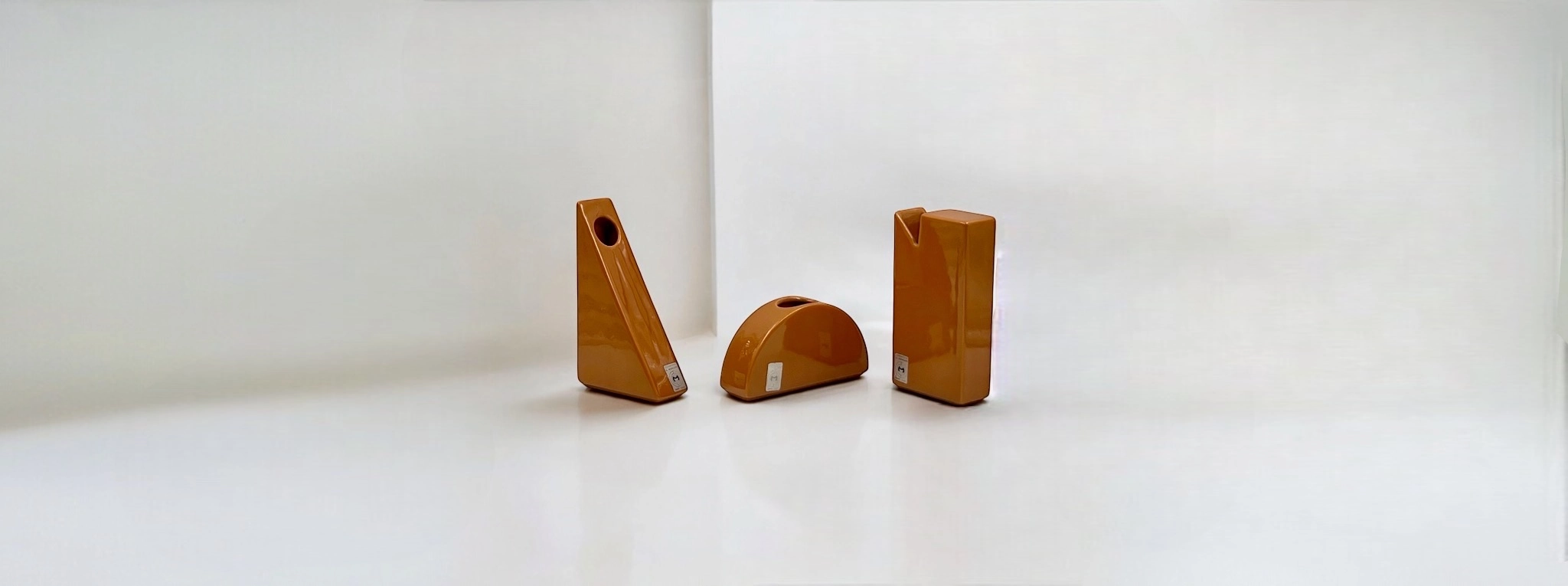

If you’re enthralled by space-age design, chances are you’re familiar with Makio Hasuike, the visionary Japanese designer who relocated to Italy in the 60s, ushering in some of the most iconic and futuristic products of the 70s. His work, ranging from tableware to vanity sets, is distinguished by its sleek shapes, bold colors, and innovative materials, perfectly encapsulating the era’s spirit.
In this blog post, we’ll delve into some of Makio Hasuike’s most remarkable creations from the 70s, examining their impact on the design world and broader culture. Additionally, we’ll guide you on where to discover some of his rare and collectible pieces online, offering tips on how to infuse your home or office with a dash of space-age elegance.
Makio Hasuike was not only a prolific designer, but also a visionary who anticipated the trends and needs of his time. He was able to transform everyday objects into futuristic and functional pieces that expressed his creative flair and technical skills.
One of the most famous examples of Makio Hasuike’s design is the “Birillo” lamp, which he created in 1970 for Gedy. This portable and rechargeable lamp was designed to be used in any environment, from the bathroom to the bedroom, and had a simple and elegant shape that resembled a cylinder with a rounded top.
The lamp could be switched on and off by rotating the top, and had a dimmer function that allowed the user to adjust the intensity of the light. The “Birillo” lamp was a revolutionary product that anticipated the concept of wireless and smart lighting, and became an icon of space-age design.
Makio Hasuike did not stop at the “Birillo” lamp, but continued to explore the possibilities of lighting design in the 70s. Among his innovative designs was the gedy plastic wall organizer, a modular and versatile system that allowed homeowners to customize their storage solutions with a futuristic touch.
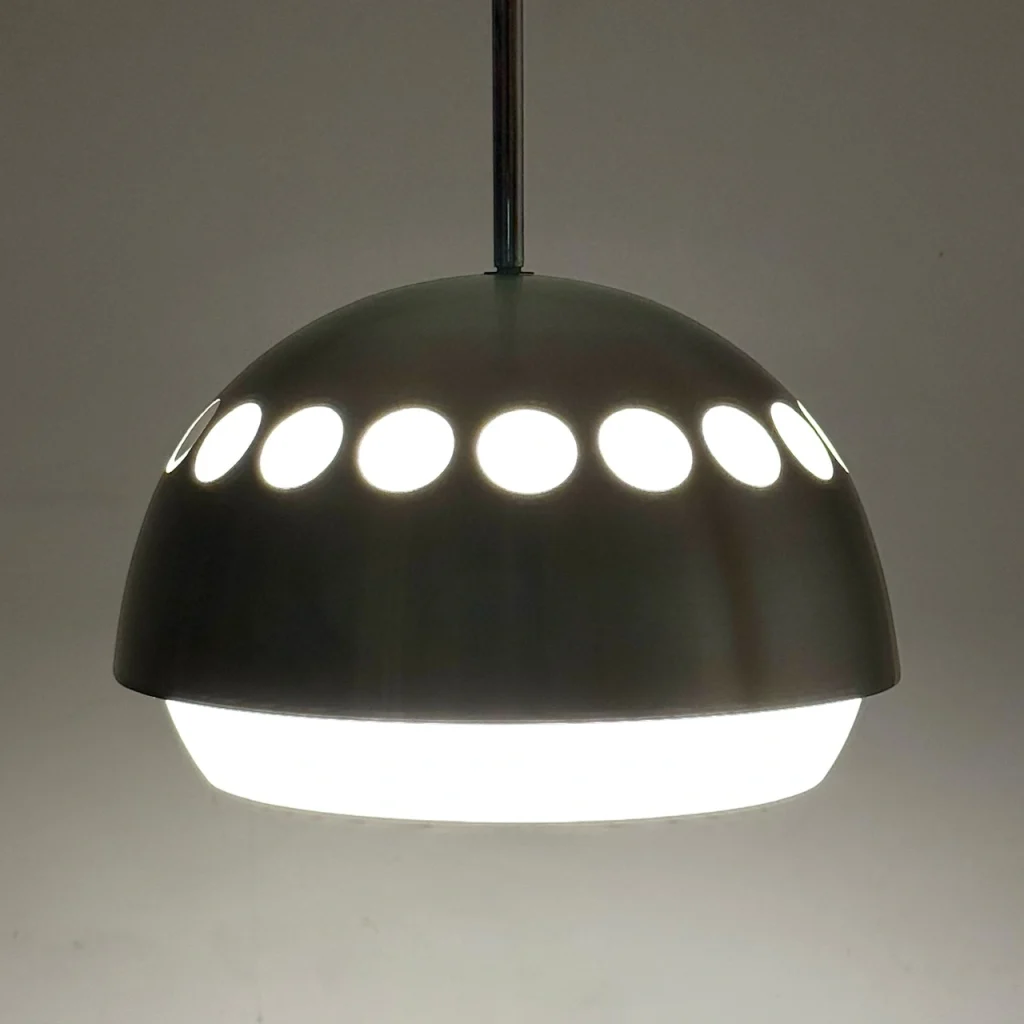
He also designed the “Luna” lamp, which was a spherical lamp that could be hung from the ceiling or placed on a table, and had a perforated surface that created a starry effect. Makio Hasuike’s lamps were not only functional, but also decorative and playful, and added a touch of whimsy and wonder to any space.
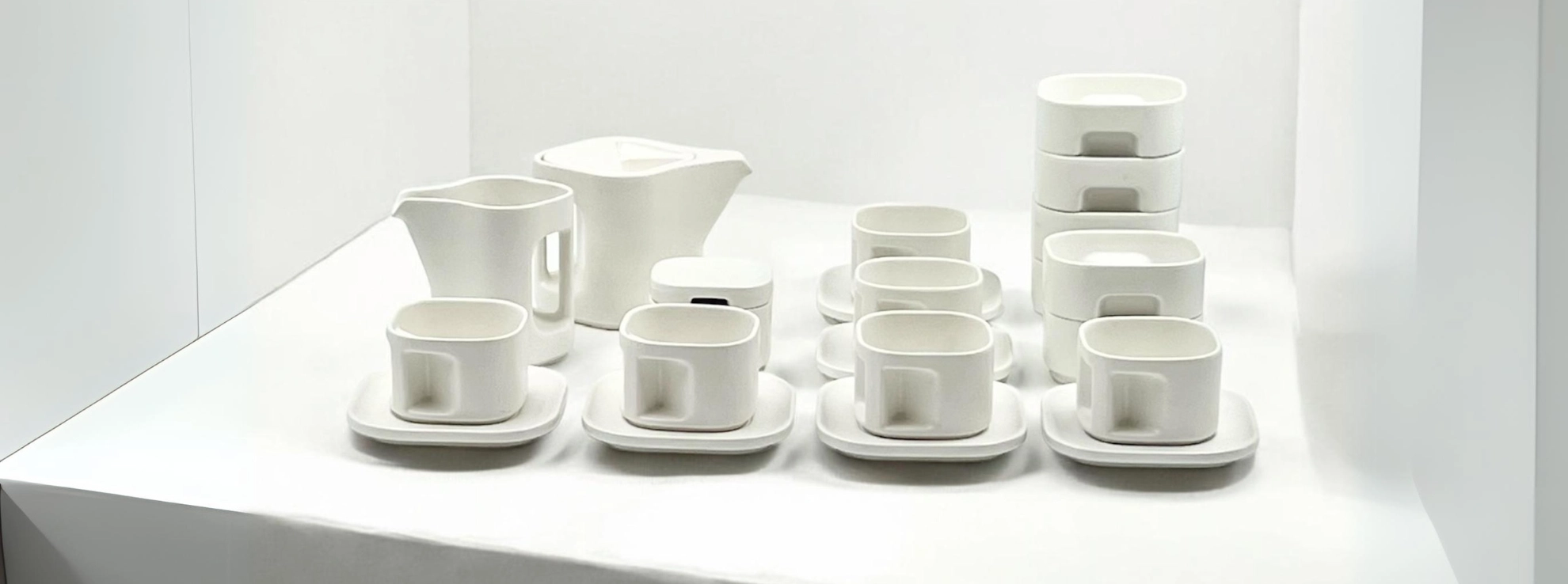
Makio Hasuike also applied his space-age design to tableware and household items, creating products that were innovative and stylish. In 1972, he designed the arnolfo di cambio ceramic coffee set, a sleek and geometric collection that contrasted with the traditional and classic style of the Italian brand. The set became a rare and collectible item that reflected the elegance and originality of Makio Hasuike’s design.
He also designed other household items, such as a coffee maker, a toaster, a kettle, and a vacuum cleaner, that had futuristic and ergonomic shapes and bright colors that made them stand out from the ordinary.
Makio Hasuike’s 70s design was not only innovative and futuristic, but also influential and representative of the era. His products captured the essence of the space-age style, which was characterized by smooth curves, geometric shapes, bright colors, and synthetic materials.
His design also integrated function and form, creating products that were both practical and aesthetic.
Makio Hasuike was a master of combining function and form, creating products that were not only useful, but also beautiful and expressive. He paid attention to every detail, from the shape to the color, from the material to the texture, from the function to the interaction.
He designed products that were easy to use, comfortable to hold, and pleasing to look at. He also experimented with new materials and technologies, such as plastic, metal, ceramic, and rechargeable batteries, to create products that were durable, lightweight, and adaptable to different environments and needs.
Makio Hasuike’s 70s design was also the result of his collaborations with iconic brands, both Italian and international, that recognized his talent and vision. He worked with brands such as Gedy, Arnolfo Di Cambio, Colombo Design, and Ceramiche Ravelli Laveno, creating products that became best-sellers and classics of the space-age style. He also designed products for other sectors, such as fashion, sports, and electronics, working with brands such as Sanyo, Puma, and Seiko.
His design was versatile and adaptable, and he was able to create products that matched the identity and values of each brand.
Makio Hasuike’s 70s design also reimagined the domestic landscape, creating products that transformed the home and the office into futuristic and stylish spaces. His products added a touch of personality and originality to the everyday life, making it more fun and enjoyable.
His products also reflected the social and cultural changes of the era, such as the rise of consumerism, the emancipation of women, and the fascination with science and technology. His design was not only a reflection of the era, but also a catalyst for change and innovation.
Makio Hasuike’s 70s design was not only innovative and futuristic, but also influential and representative of the era. His products captured the essence of the space-age style, characterized by smooth curves, geometric shapes, bright colors, and synthetic materials. His design also integrated function and form, creating products that were both practical and aesthetic.
Makio Hasuike’s 70s design has influenced many modern designers and products, both in Italy and abroad. His design philosophy of creating products that are simple, elegant, and user-friendly has inspired many contemporary designers, such as Philippe Starck, Marc Newson, and Karim Rashid. His products have also influenced the design of modern gadgets, such as smartphones, laptops, and smartwatches, which share some of the features of his space-age style, such as sleek shapes, bright colors, and wireless technology.
Makio Hasuike’s 70s design has shown that design can be both timeless and innovative, and that it can adapt to the changing needs and tastes of the society.
Makio Hasuike’s 70s design is also highly collectible and valuable, as many of his products are rare and sought-after by collectors and enthusiasts of vintage design. Some of his products, such as the “Birillo” lamp, the black ceramic tableware, and the vanity set, are considered icons of space-age design, and can fetch high prices at auctions and online platforms.
Some of his products are also preserved in museums and exhibitions, such as the Museum of Modern Art in New York, the Triennale Design Museum in Milan, and the Design Museum in London, where they are displayed as examples of the excellence and originality of Italian design. Makio Hasuike’s 70s design is also appreciated by many people who love the retro and nostalgic style of the era, and who want to add a touch of space-age flair to their home or office.
Makio Hasuike’s 70s design has also had a significant impact on design education and philosophy, as he has shared his knowledge and experience with many students and professionals in the field of design. He has taught at several prestigious institutions, such as the Domus Academy in Milan, the Polytechnic University of Milan, and the University of Arts of Tokyo.
He has also given lectures and workshops around the world, spreading his vision and passion for design. He has also written books and articles on design, such as “Design: The Challenge of Change”, “Design: The Search for Quality”, and “Design: The Human Factor”.
Makio Hasuike’s 70s design has shown that design is not only a profession, but also a way of life, and that it can make a positive difference in the world.
Makio Hasuike, an influential and visionary designer of the 70s, crafted products that not only epitomized the space-age style but also foresaw the future. His creations are a blend of innovation, functionality, elegance, and expressiveness, showcasing his creative flair and technical prowess. These products have become highly collectible and valuable, standing as rare and iconic symbols of Italian design.
Hasuike’s design philosophy and vision have inspired a multitude of modern designers and products. Beyond his tangible creations, he has made significant contributions to design education and philosophy, sharing his profound knowledge and passion with the global community.
If you are intrigued by Makio Hasuike’s 70s design, his products can be discovered online on platforms like Etsy, where a plethora of vintage and retro items await from various sellers. For a deeper dive into his design ethos and career, consider exploring his books and articles, or visiting his website and studio. Makio Hasuike’s 70s design remains a treasure trove of innovation and beauty, offering endless inspiration and delight to those who cherish design and culture.
Makio Hasuike is a prominent Italian industrial designer who founded his studio in Milan in 1968. His design philosophy emphasizes the search for innovation through the ability to look beyond and ahead, creating products that are simple, functional, and connected with nature.
The Arnolfo di Cambio collection is a series of crystal products designed by famous Italian designers and handcrafted by expert Tuscan artisans. It is considered iconic because it reflects the creative genius and the great Italian tradition of glassware, and it includes the Blade Runner Glass, which appeared in the movie Blade Runner.
The portable vanity set by Makio Hasuike for Gedy is actually a space age vanity set that epitomizes the 1970s design language. It features a mirror and a storage box that showcases Hasuike’s ability to combine functionality with futuristic aesthetics. Opening the lid reveals the mirror and the compartments, which are perfect for storing and applying cosmetics or other personal items.
Some other examples of Makio Hasuike’s 70s innovations include: