
1.200,00 €
A unique vintage piece
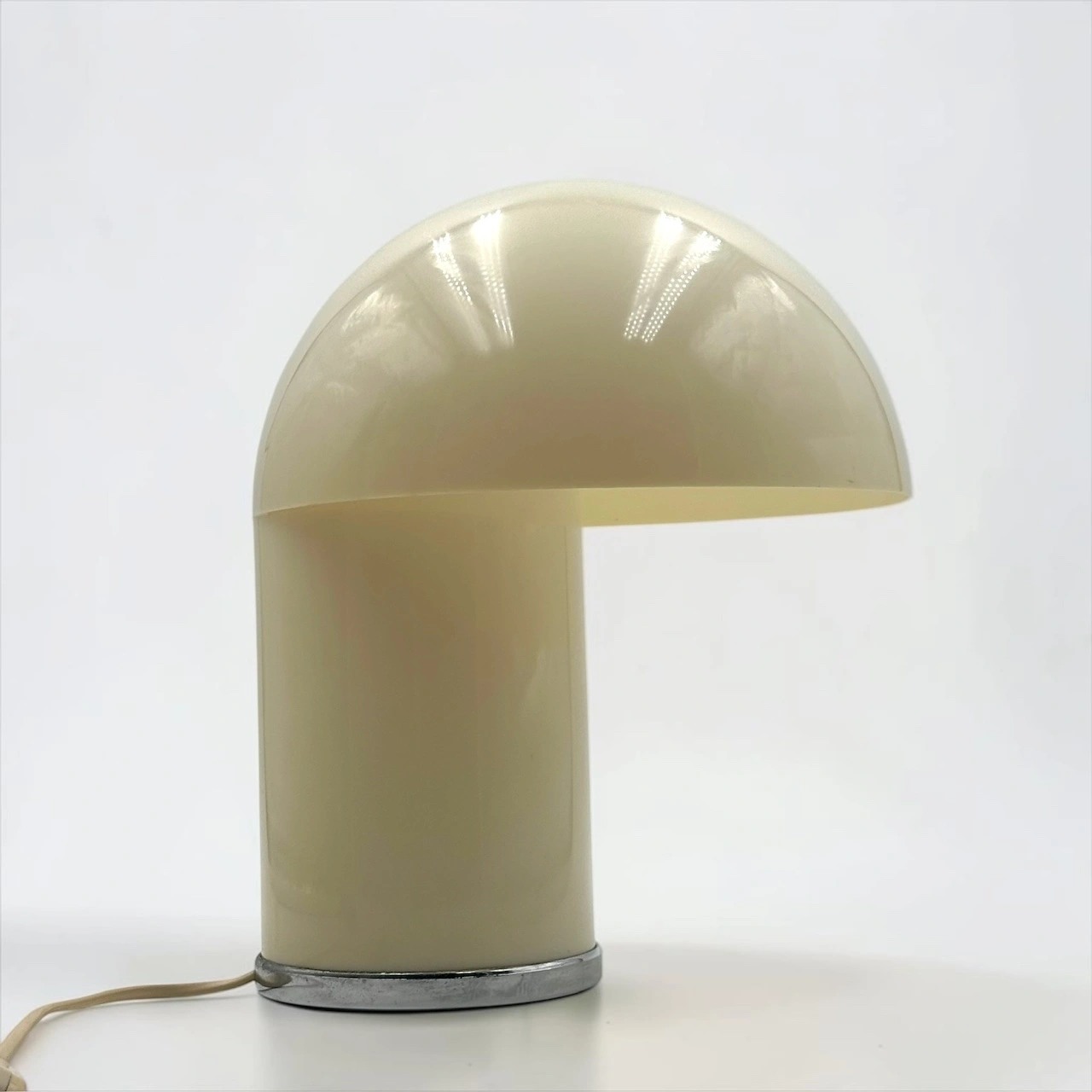
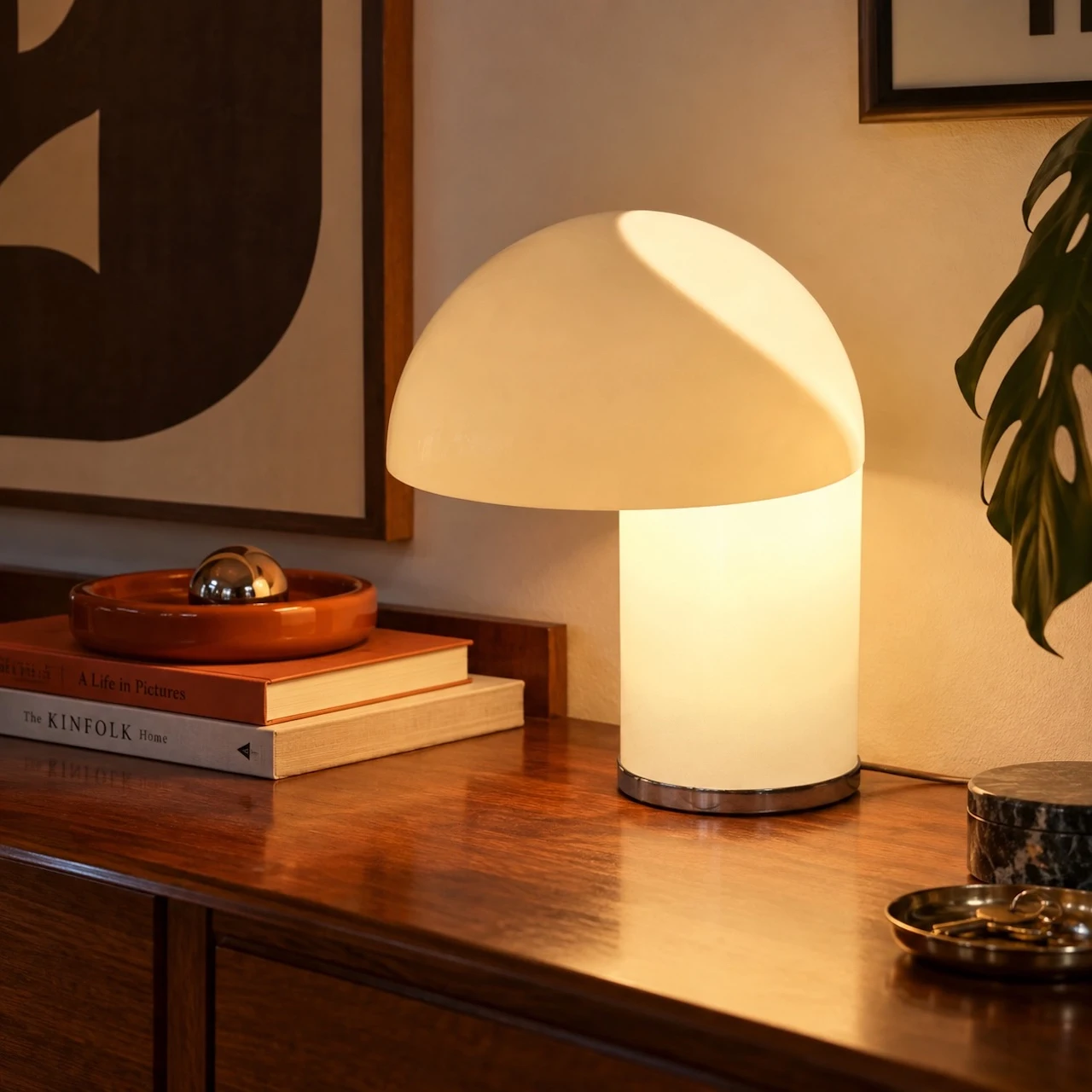
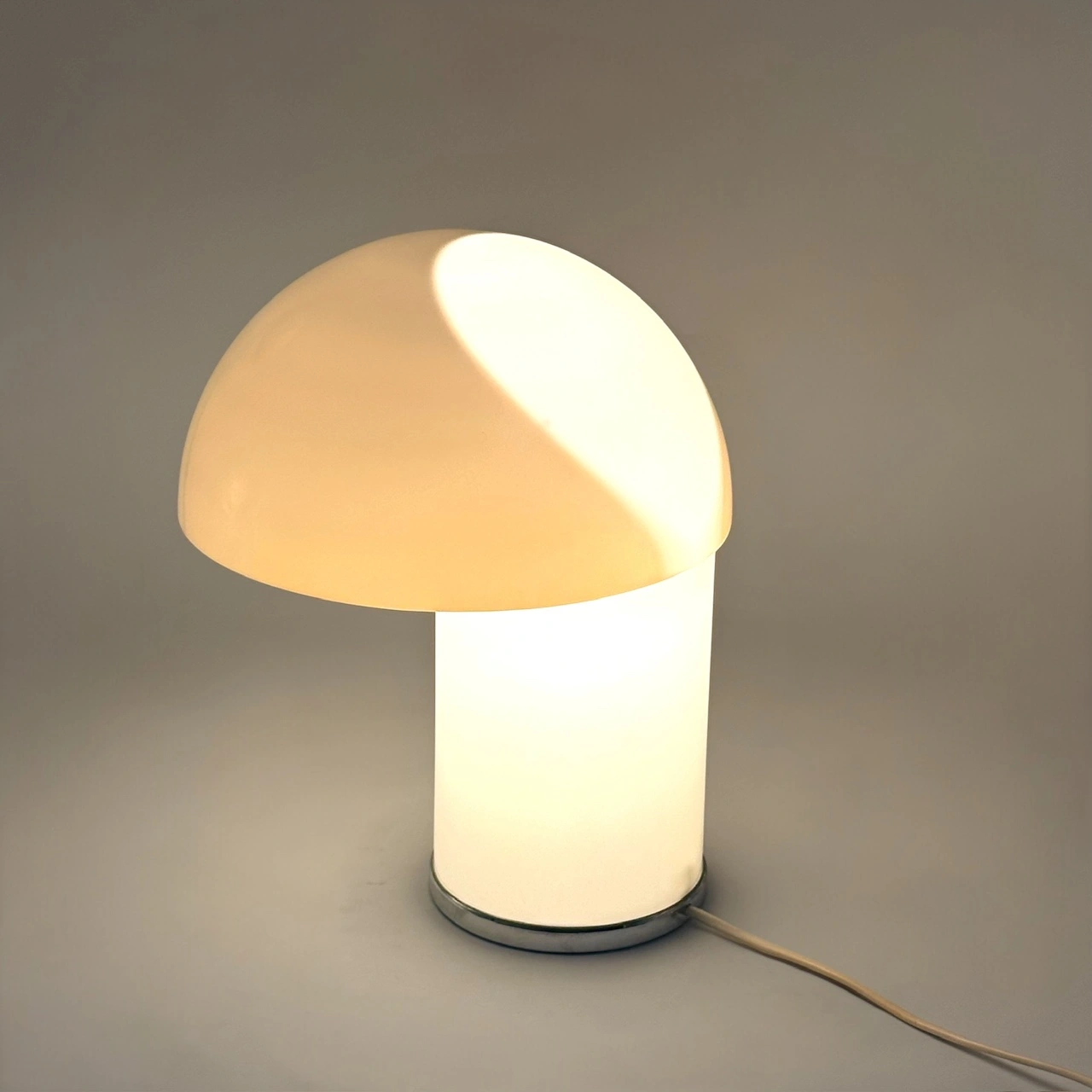
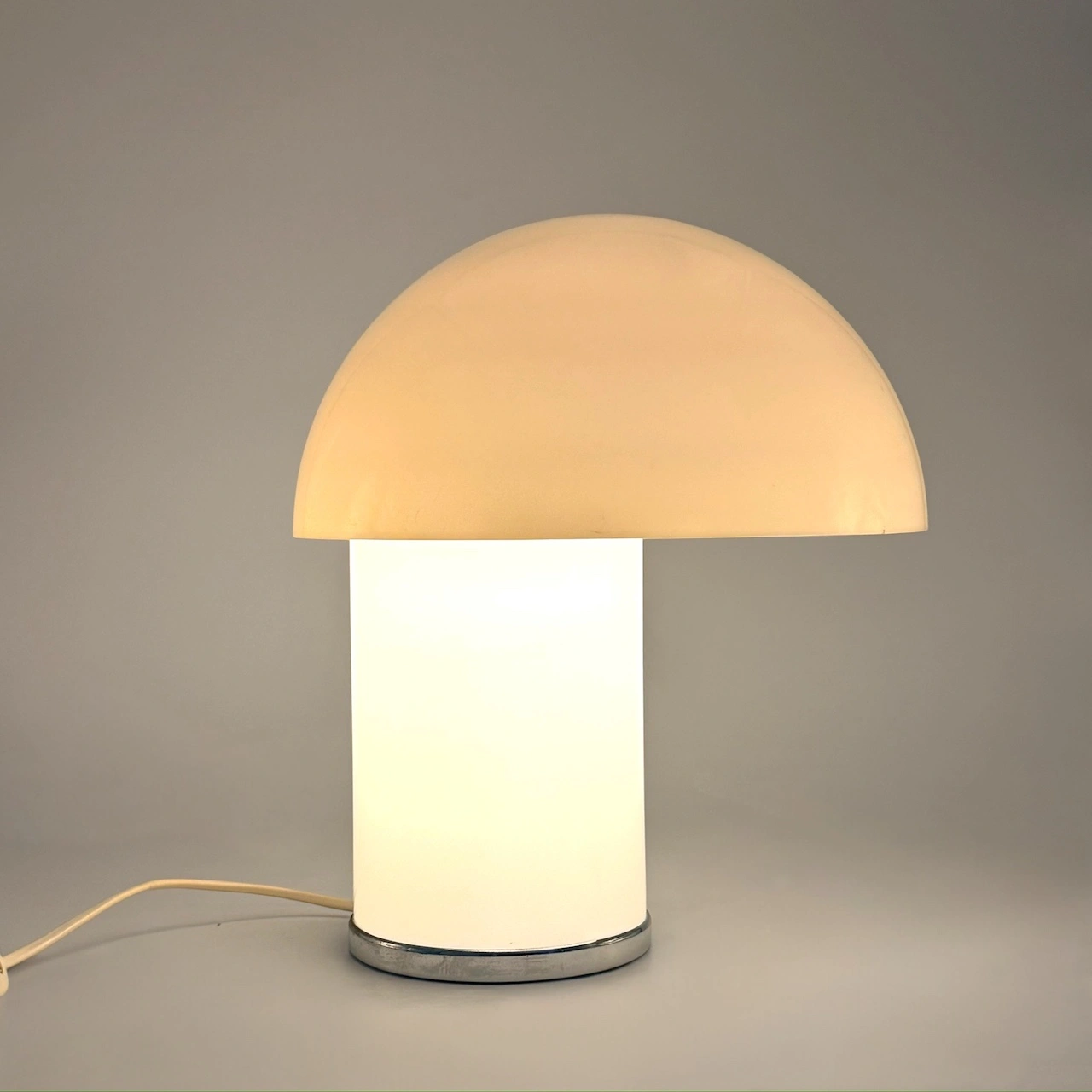
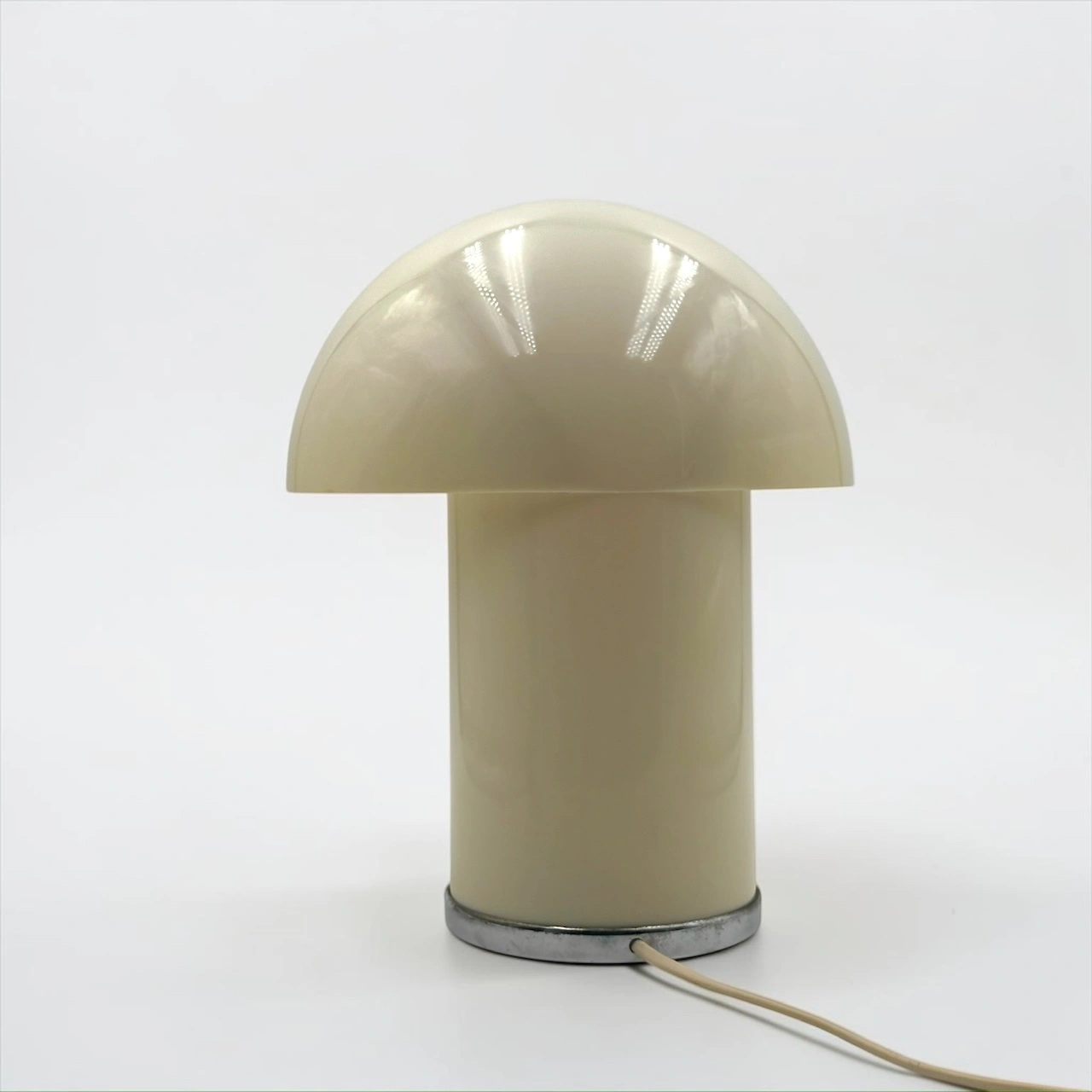
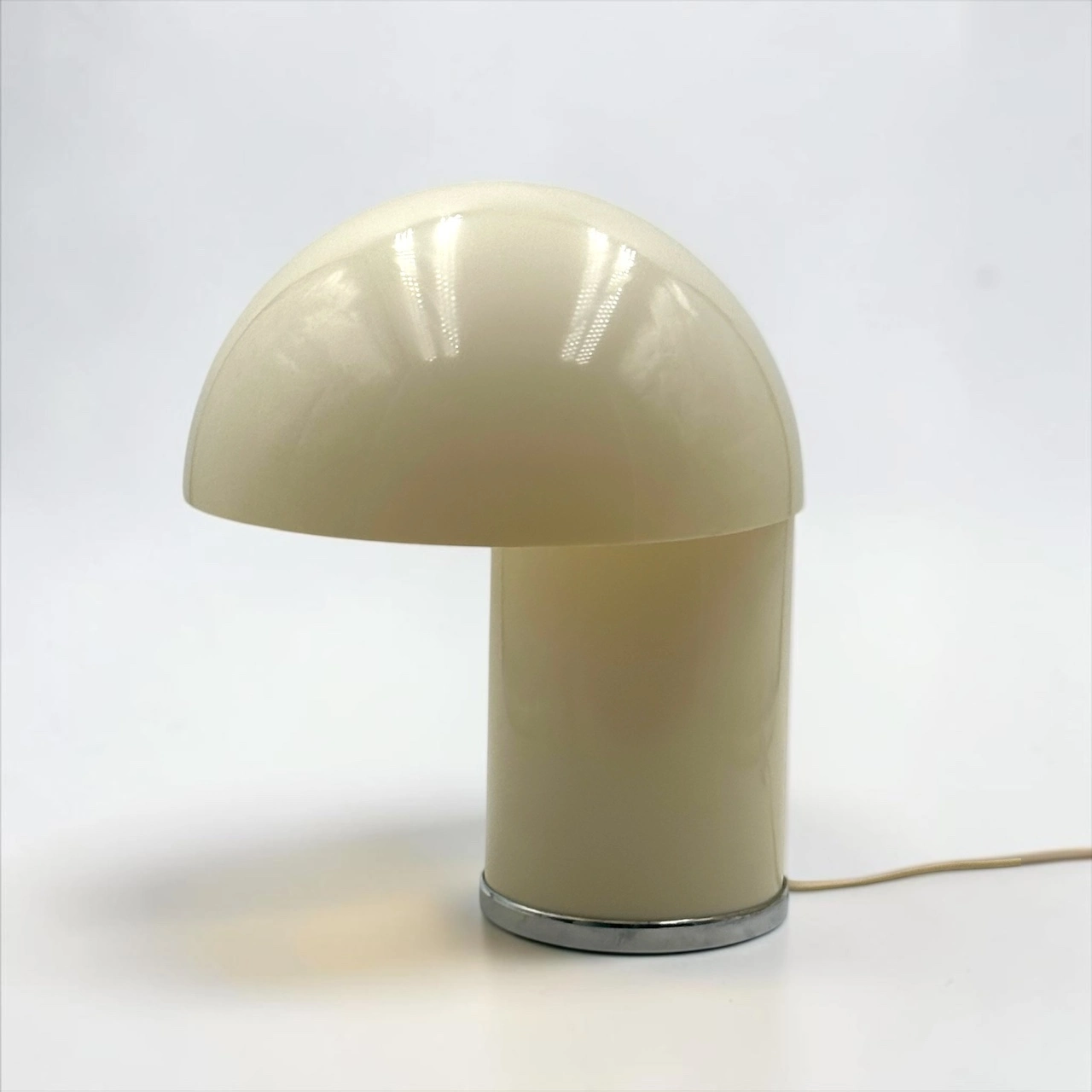
A rare Leila lamp by Verner Panton and Marcello Siard, designed in 1968 for Collezioni Longato. Its extraordinary mushroom silhouette becomes a continuous luminous volume when switched on, transforming one of the purest forms of Italian Space Age lighting into a remarkably atmospheric object.
Question or details? We reply personally.
Professionally packed and fully insured worldwide
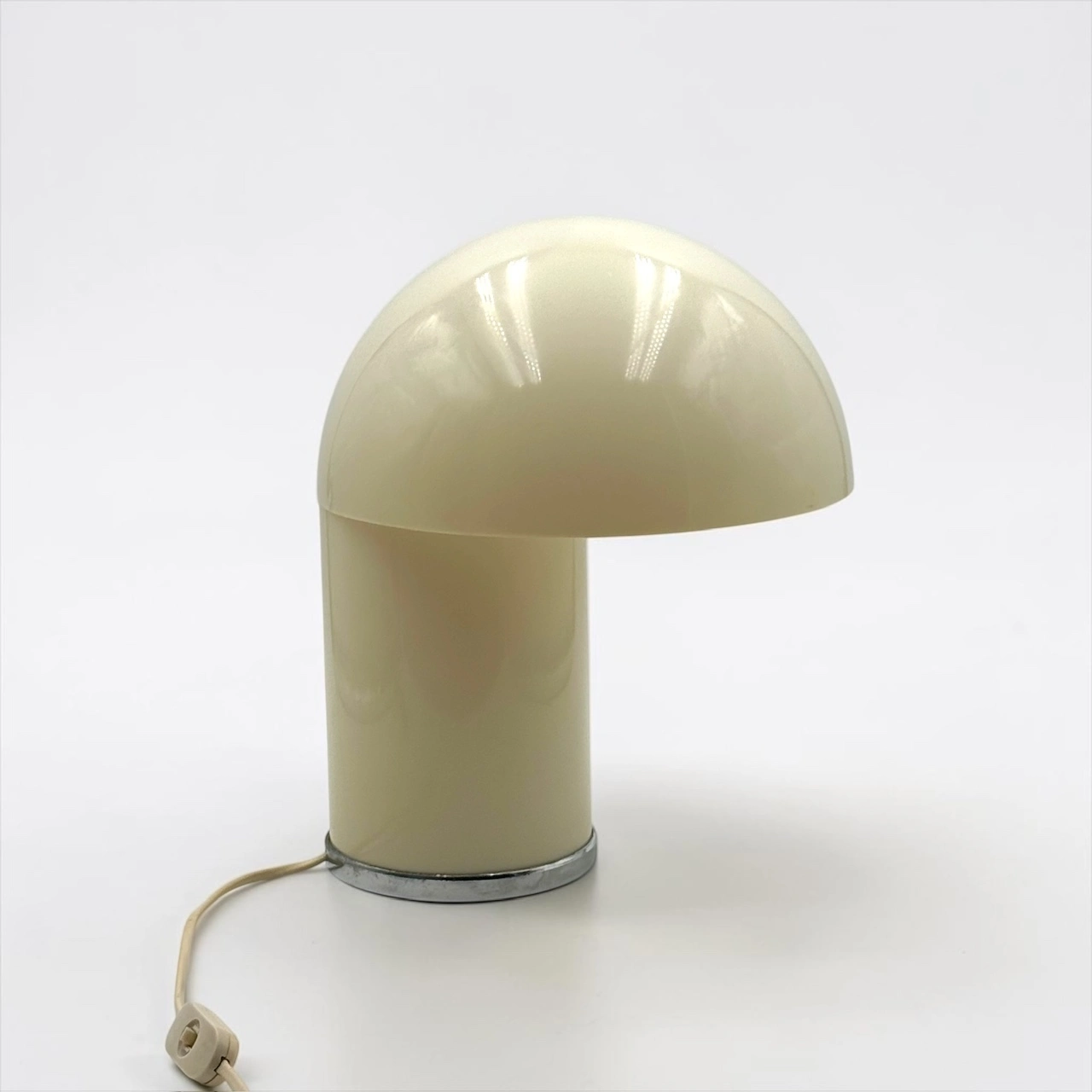
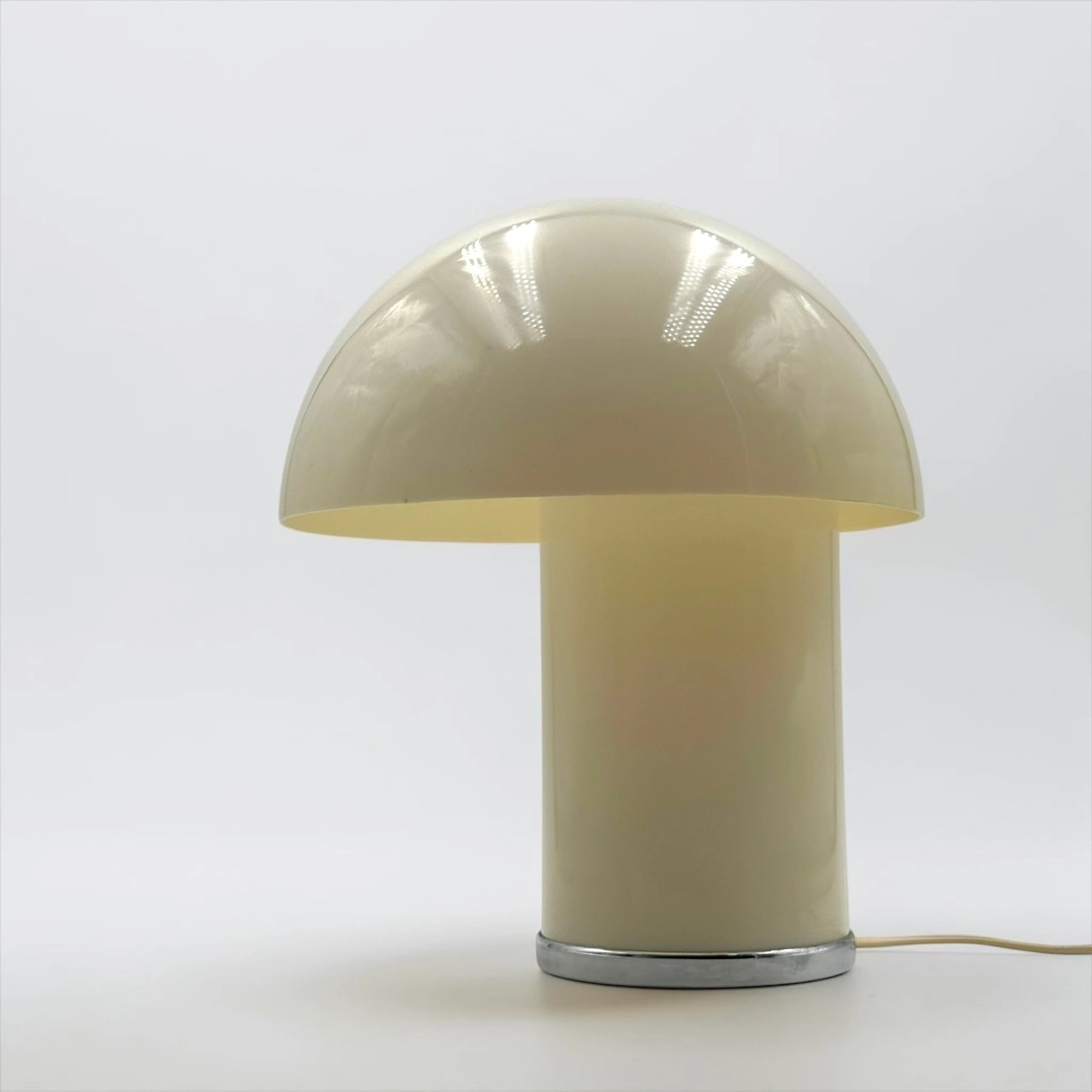
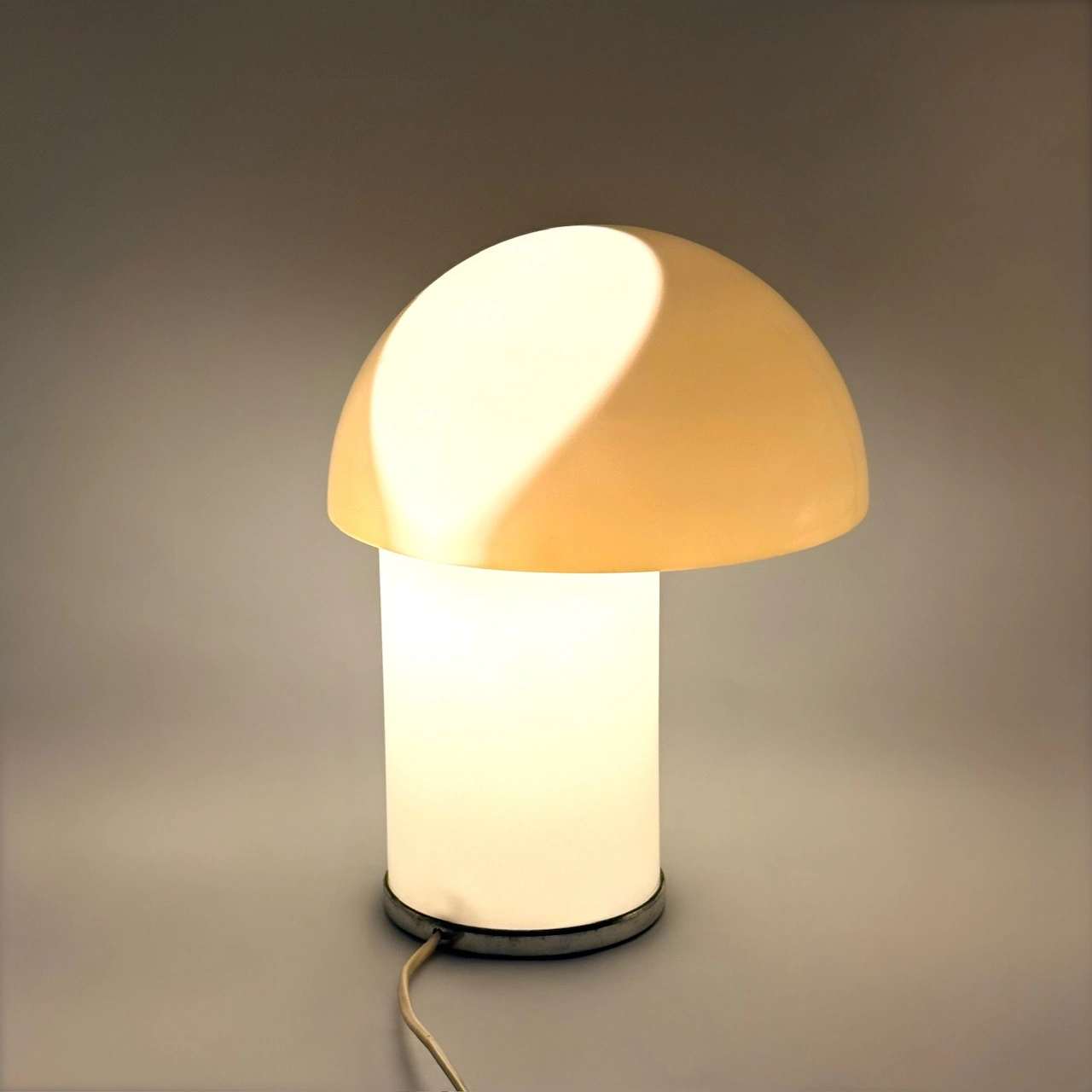
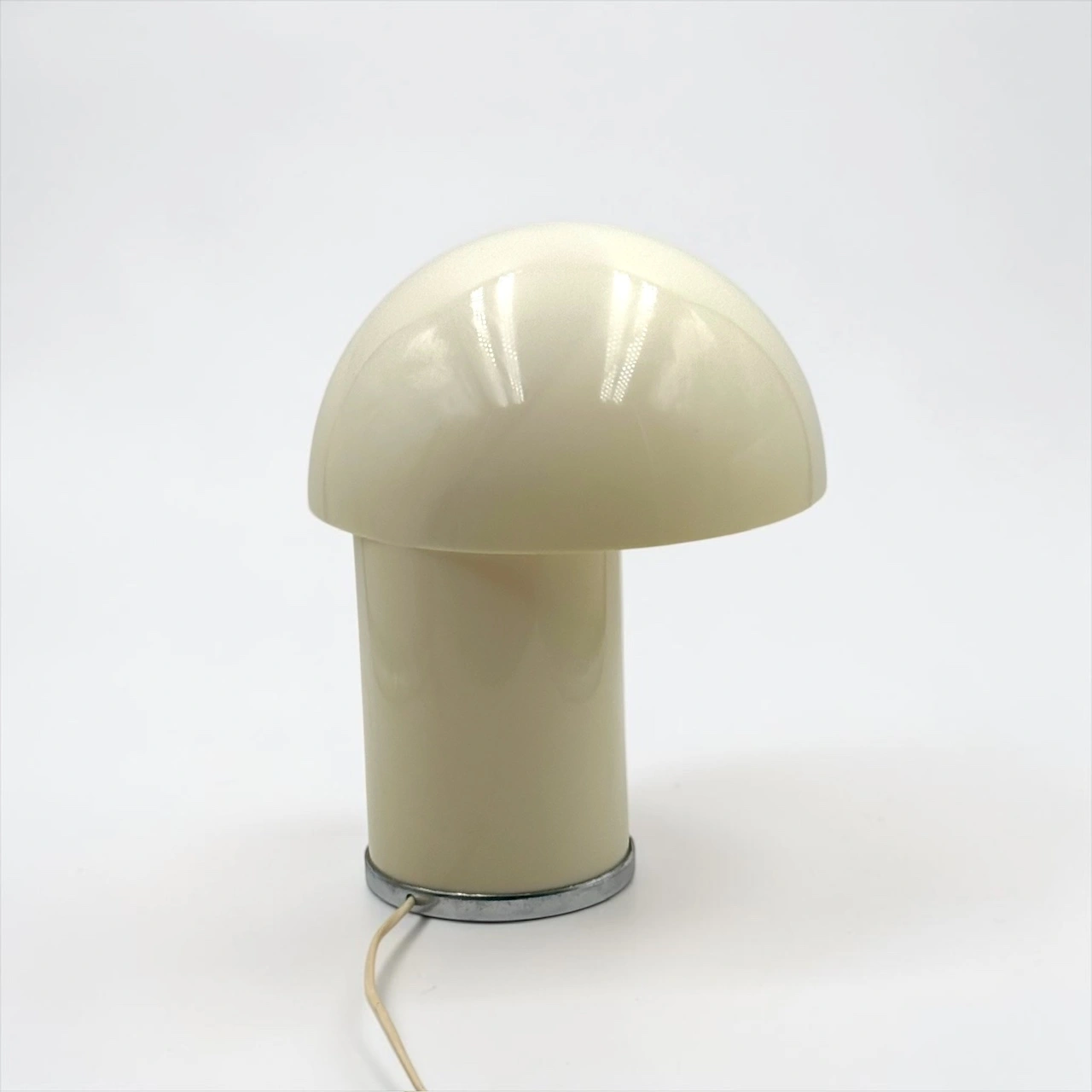
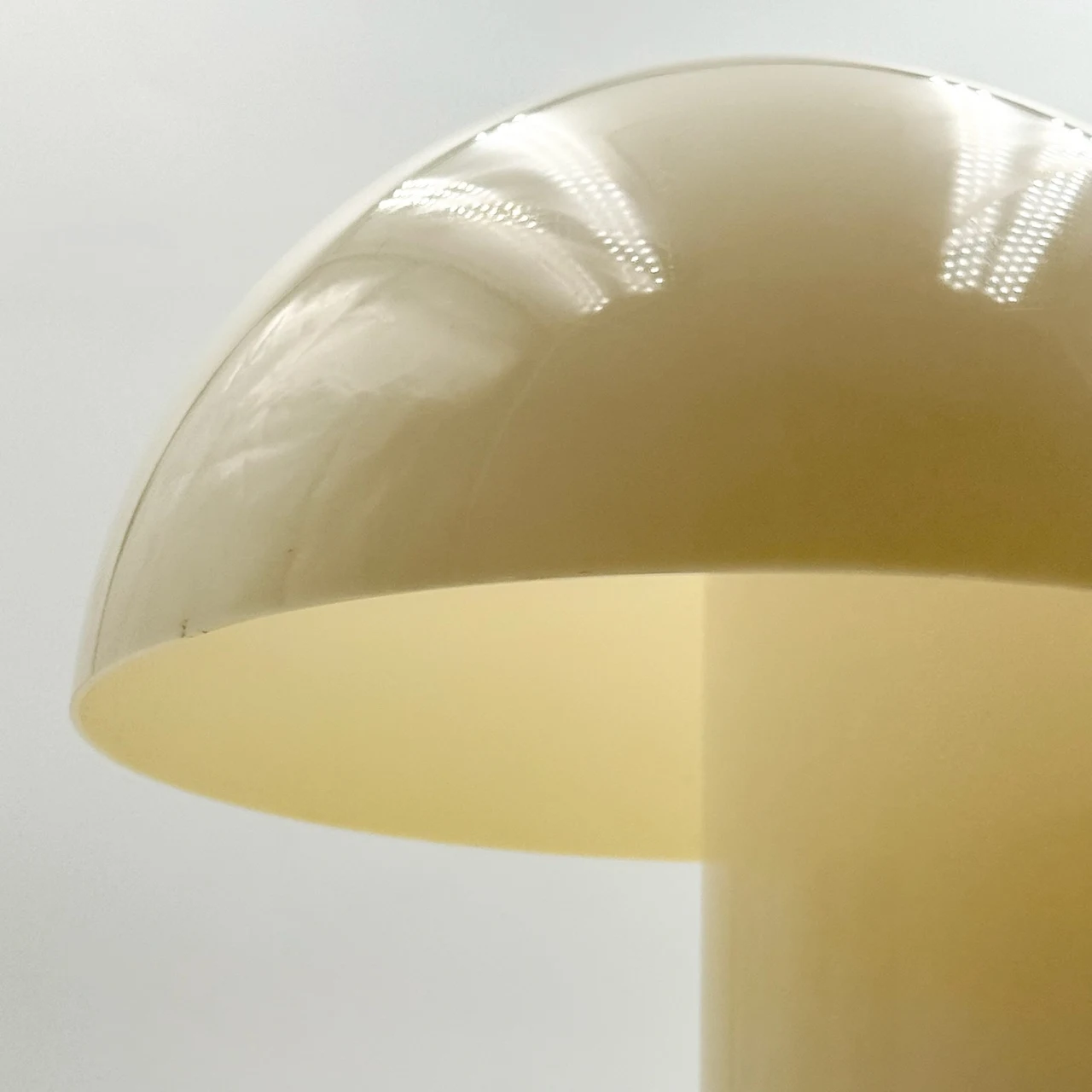
The Leila lamp by Verner Panton and Marcello Siard was designed in 1968 for Collezioni Longato of Padua and remains one of the more elusive examples of Italian Space Age lighting from the period. Model 1010 reduces the table lamp to an exceptionally pure composition: a cylindrical luminous body supporting an oversized hemispherical dome, joined visually into a single continuous form.
Leila becomes particularly compelling when illuminated. Light travels through both the translucent cylindrical body and the broad dome above, softening the distinction between structure and diffuser and transforming the entire object into a warm, glowing volume. A narrow chromed metal base provides the only contrasting element, visually anchoring the otherwise almost weightless composition.
The design reflects the radical experimentation with plastics and elementary geometry that characterized progressive European lighting during the late 1960s. Rather than articulating base, stem and shade as separate components, Panton and Siard allow them to merge into a unified mushroom-like silhouette. The result is simultaneously functional and sculptural, with a remarkably contemporary presence more than half a century after its creation.
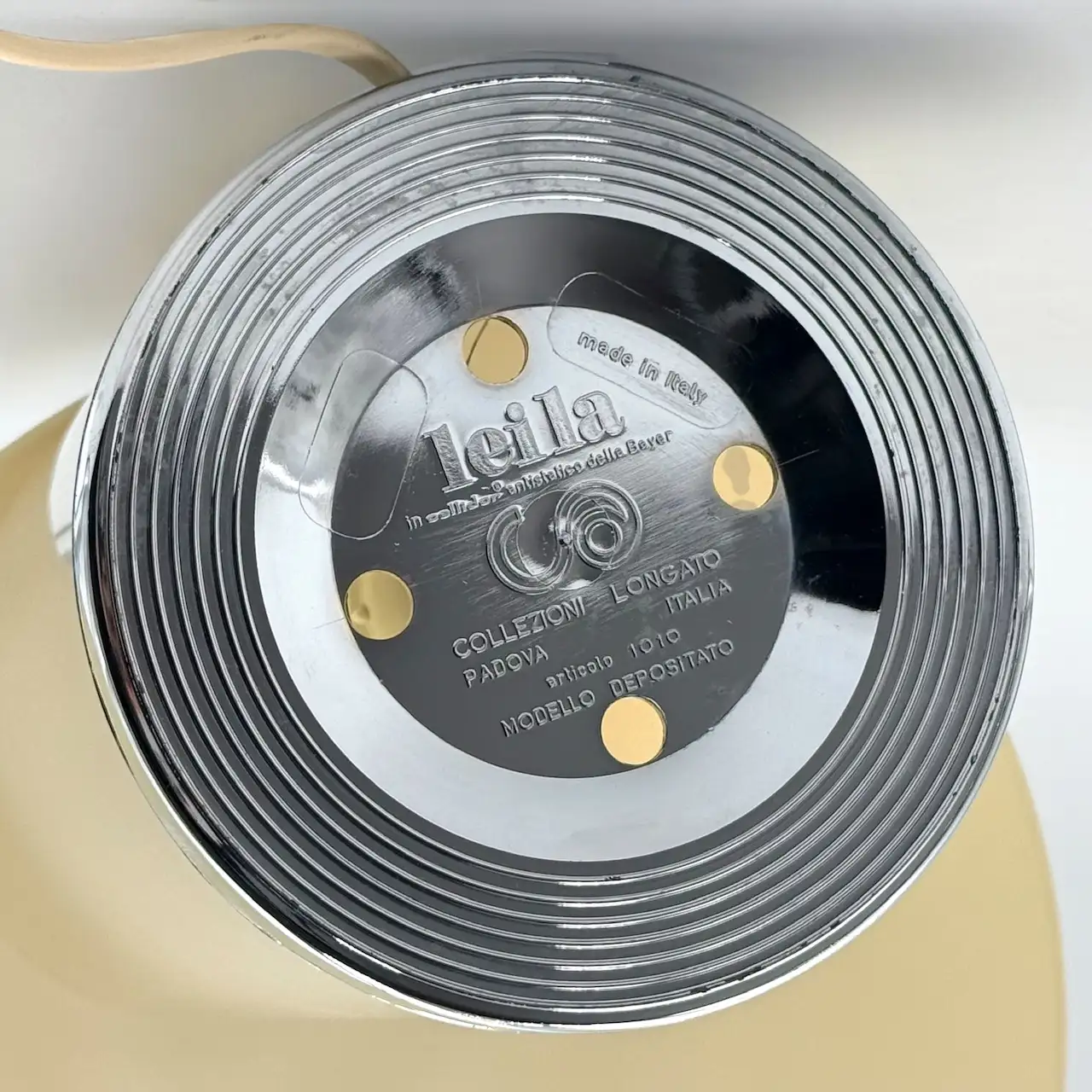
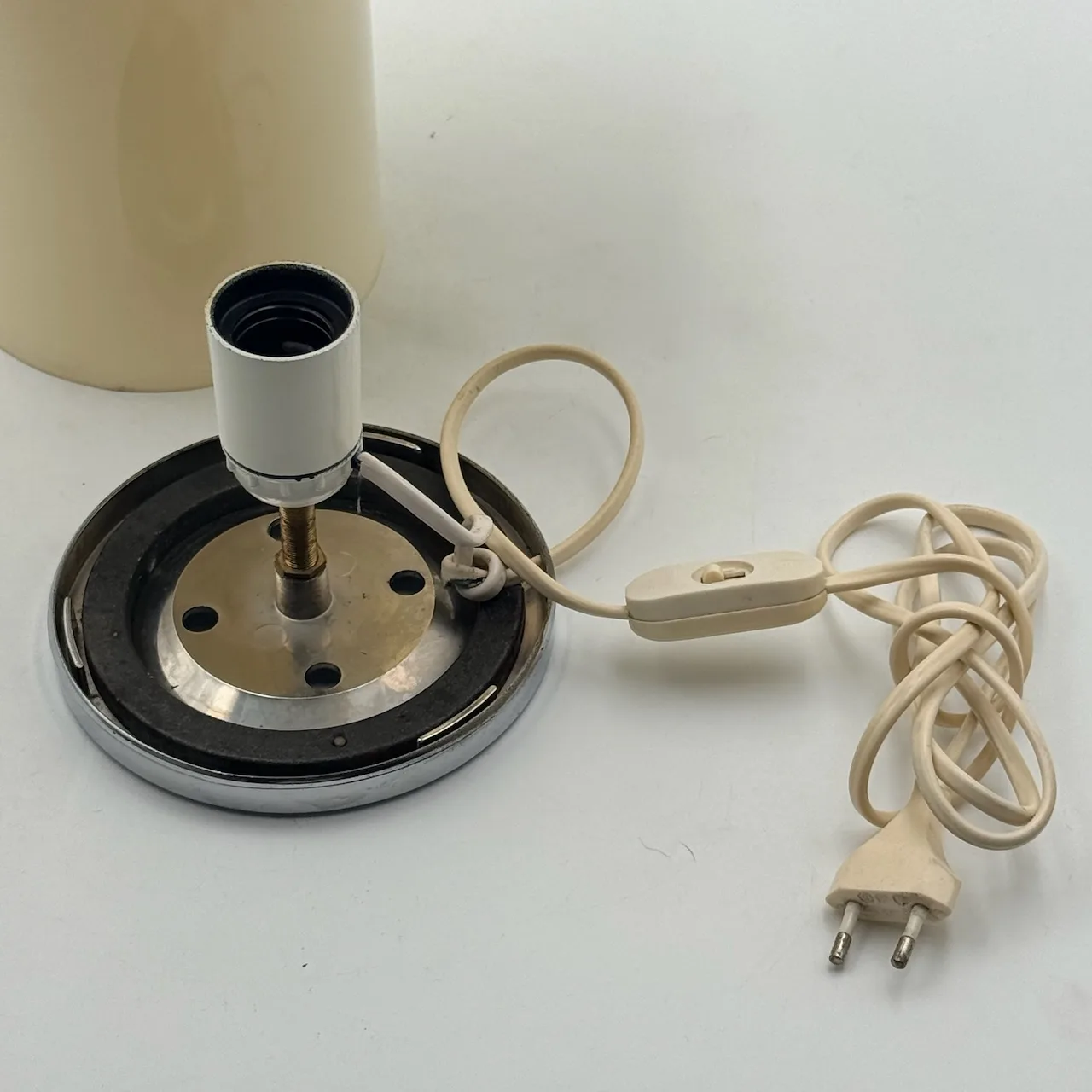
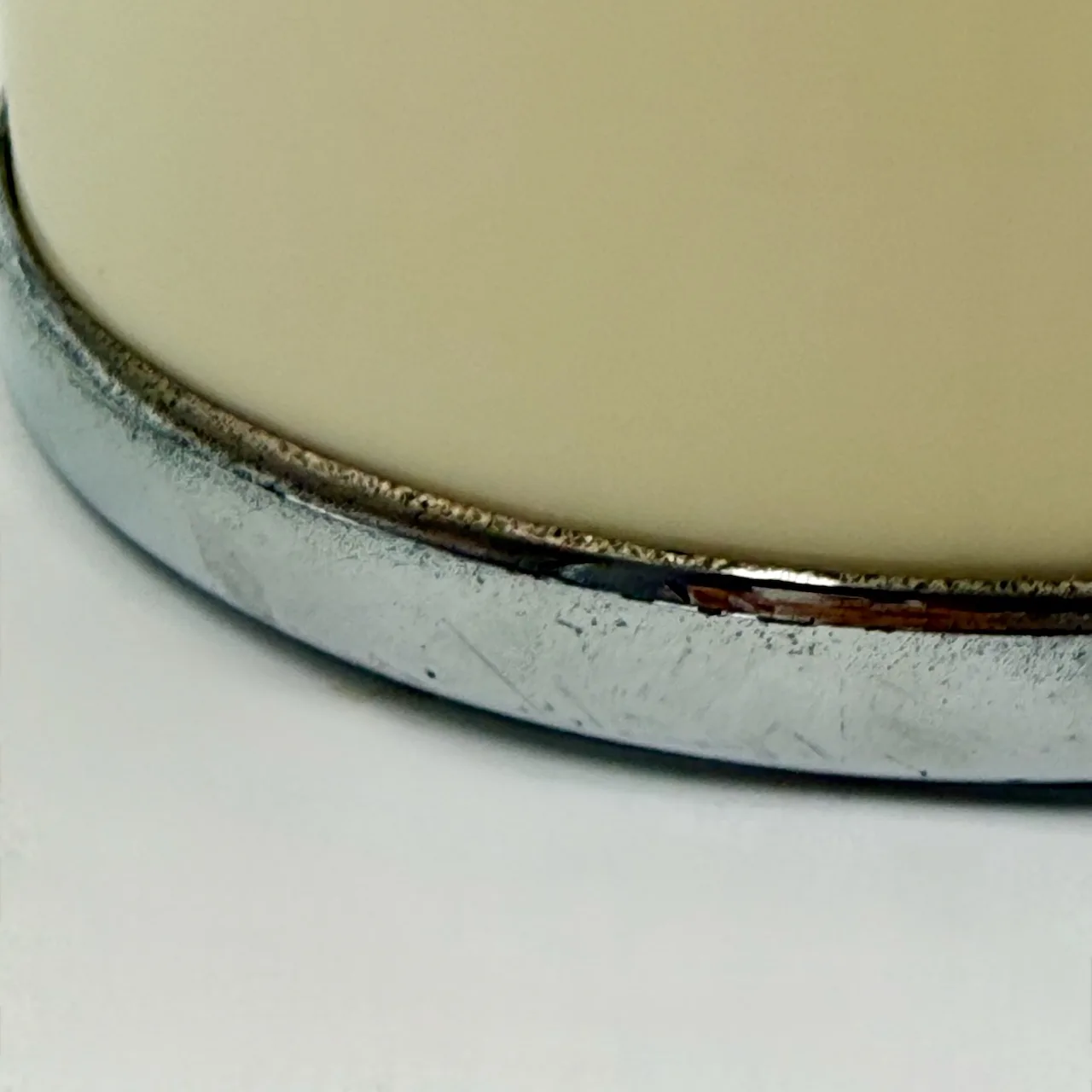
This example retains the molded underside identification for Leila, Collezioni Longato of Padova, article 1010 and “Modello Depositato”. Particularly noteworthy is its state of preservation: the broad plastic dome remains beautifully shaped, with none of the heat deformation sometimes encountered on surviving examples. Minor surface marks, small spots and oxidation to the chromed base remain as discreet traces of age.
Selected for our Editor’s Picks for its remarkable formal purity, rarity and exceptional state of preservation — a particularly compelling example of late 1960s Space Age lighting.
To explore the wider context behind this radical approach to form, materials and light, discover our guide to Space Age lamps, tracing the designs and ideas that transformed lighting into one of the most experimental fields of the era.